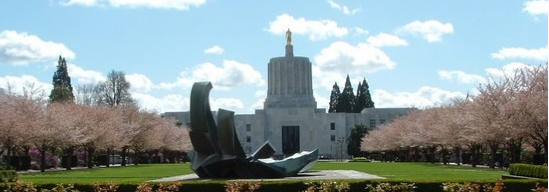
. . . This is why the funding of American libraries should be a matter of national security. Keeping libraries open, giving access to all children to all books is vital to our nation's sovereignty. For nearly 85 percent of kids living in rural areas, the only place where they have access to technology or books outside the schoolroom is in a public library. For many urban kids, the only safe haven they have to study or do homework is the public library. Librarians are soldiers in the battle for our place in the world, and in many cases they are getting the least amount of support our communities can offer.
We need to shift our national view of libraries not as luxuries, but as necessities. When tragedy strikes in other nations, Americans are generous, but our libraries are being hit with a tsunami and there has been no call to action. Staffs are being fired. Hours are being cut. Doors are being closed. Buildings are being razed. Kids are being left behind. Futures are being destroyed.
Libraries are the backbone of our educational infrastructure, and they are being slowly broken by bankrupt municipalities and apathetic politicians. As voters and taxpayers, we have to demand that our local governments properly prioritize libraries. As charitable citizens, we must invest in our library down the street so that the generations serviced by that library grow up to be adults who contribute to not just their local communities, but to the world. . . .
Sunday, September 19, 2010
Recognizing libraries as necessities


Saturday, September 18, 2010
Most Fervent Unsolicited Plug yet: SunWize
Today we signed a deal with SunWize to put 4338 watts of solar panels on the south-facing roof here at LOVESalem HQ. Gross cost $5.48/watt; net installed cost after Energy Trust of Oregon rebates and federal and state tax credits = $1.29/watt, The (conservative) estimate is that the system will provide for 85% of our electric power on an annual basis. I actually expect better because 2009-10 usage included use of two powered devices that we're done with.
I called a bunch of SunWize customers to check them out and every single one really raved about SunWize and the performance they've attained on their systems. Given the upcoming budget issues at both the state and federal level making continuation of these incentives more doubtful every day, this would be a good time to look into solar if you've got the right spot -- contact Matthew Henderson (503.881.7346) and he'll come out and check out your solar resource potential and system possibilities with no pressure.
Friday, September 17, 2010
"Micmacs" at Salem Cinema: A joyous way to kick off MyPeace month
 Image via WikipediaDon't miss it -- a charming, joyous, exhilarating movie that is, above all, loads of fun.
 September 17 - 23
Micmacs
In French with English Subtitles.
Friday 6:00 8:40
Saturday (*12:30) (*3:15) 6:00
Sunday (*12:30) 6:00
Monday (*12:30) 7:40
Tuesday 7:40
Wednesday/Thursday (*5:20)
(*Bargain Shows)

Thursday, September 16, 2010
MyPeace Month starts in the city named for Peace
 Image by Adele McAlear via FlickrQuite a lineup of activities and brainfood events for Oregon Peaceworks' "MyPeace" month:
John Perkins' talk launches the MyPeace Project, a month of events in October featuring artistic visions of peace and sustainability by Oregonians that includes display art, performances, music, dance, poetry-prose, films, lectures, green living classes and tours, ending with a "Peace Shindig" celebration. For schedule of events: (503) 585-2767 or www.mypeaceproject.org.
Here is the full calendar of MyPeace events. Take a moment to enter them into your calendar now! All events are free unless otherwise noted.
- Sun, Sept. 19: Kites 4 Peace at Bush Park 2-4 pm.
- Tues, Sept. 21: John Perkins Lecture, Smith Auditorium, WU 7:30 pm.
- All September-October: "Whirled Peas" Quilts, Greenbaum's.
OCTOBER:For more information on any of these events, visit www.bit.ly/mpschedule.
- 1st, Fri: Art and Mayoral Proclamation, Ladd & Bush Bank Lobby, 12-3 pm.
- 1st, Fri: Display Art, Coffee House Cafe Gallery 7-10 pm.
- 2nd, Sat: Solar & Green House Tour at Pringle Creek Community.
- 6th,Weds: 1st Wednesday: Doors 2 Peace display and Free Hugs downtown.
- 7th, Thurs: Dances of Universal Peace, Unitarian Universalist Church, 7 pm.
- 7th: M.C. Mehta, Global Climate Change, Willamette U. law school, 7 pm
- 8th, Fri: M.C. Mehta, "Ethical and Spiritual Considerations of Going Green," Marco Polo Restaurant. Buffet dinner at 6:30 pm. $30.
- 8th: Tom Rawson, folksinger, Capitol Manor Comm Ctr, 7 pm. $10-20
- 9th, Sat: "Living Peacefully," Written Performance Art, Coffee House Café.
- 9th: Arts for advocating peace in the public arena workshops, Capital Manor, 9 am - 3 pm.
- 10th, Sun: Performance Art Presentations - Grand Theatre 2-5 pm.
- 13th, Weds: Thich Nhat Hanh Mindfulness Peace Celebration, Woodland Chapel at 7 pm.
- 14th, Thurs: Salem Progressive Film Series: "Soldiers of Peace" - Grand Theater, 7 pm. $3/Students $2.
- 16th, Thurs: Yoga event, Pringle Creek Community, 8-9:30 am.
- 16th: "Promoting Peace Through Green Living," Pringle Creek Community, Sustainability Workshops, 9:30-11 am and Bike Clinic 1-5 pm.
- 21st, Tues: Salem Peace Lecture featuring Fr. John Dear. Mary Stuart Rogers Music Center, Hudson Hall, Willamette University. No charge. 7:30 pm.
- 22nd, Weds: Dancing with Conflict, Pt. I: Interfaith panel and Peace Visioning exercise, 7 pm, Putnam Center, Willamette University. No charge.
- 23rd, Thurs: Dancing with Conflict Pt. II: Conflict Resolution skill-building, 8:30 am - 4 pm, Putnam Center, Willamette University, Registration: $10-25 sliding scale.
- 24th, Fri: Peace Kite Flying on Make a Difference Day, 2-4 pm, Riverfront Park. Music & food provided.
- 30th, Sat: Peace Shindig, West Salem Masonic Lodge 7-10 pm. (Admission: Adult - $10 or $7 w/ 3 canned goods; Children - $7 or $5 w/ 3 canned goods All canned goods will be donated to Marion-Polk Food Share.)
Information is changing daily so if you don't find what you need, please check back in a day or two or call Oregon PeaceWorks at 503-585-2767.

Wednesday, September 15, 2010
Wrong direction in a hurry
Tuesday, September 14, 2010
Rally against the banksters that broke America
 Image by seiuhealthcare775nw via Flickr
Please come and support the action, led locally by SEIU, to stand up against Big Bank Greed: for example, high rates of foreclosures in Oregon, exorbitant fees, lost pension funds, all contributed to triggering a downward spiral in our economy and our state budget. This has hurt the lower income individuals most severely and it is time for everyone to stand up to the big banks.More info on ways to move your money so that you're not investing in the third-worlding of America. Credit unions are your best bet, and Salem is blessed with some good ones.
DAY - September 17th Friday
WHERE - Bank of America office, 390 High Street, Salem at corner of Center & High
TIME - 12:00 to 1:00 pm
Join your friends and neighbors in saying "Shame On You" to big banks!

Monday, September 13, 2010
Another must read: Bob Hirsch interview
 Image via WikipediaGuest Post by Steve Andrews
 Robert L. Hirsch, Roger Bezdek and Robert Wendling have coauthored a new publication, this time a book called “The Impending World Energy Mess: What It Is and What It Means to You,” a book to be released by publisher Apogee Prime late this month.
Andrews: In your earlier work dating back at least five years, you resisted forecasting a time frame for peak oil. There seems to be a bit of a change on that front in your book. Care to comment on that?
Bob Hirsch: In years past, there was considerable uncertainty in my mind about when the decline of world oil production might begin. Recently it became clear to me that it’s going to be sooner rather than later. I believe that the onset of the decline of world oil production is likely in the next two to five years. And when I say “oil,” I mean all liquid fuels.
Andrews: You say that once declining oil supplies hits, we’re likely to experience deepening worldwide economic damage. How is that likely to unfold? What is your most likely scenario?
Hirsch: Our thinking is that what happened in the two sudden oil shocks of 1973 and 1979 is very likely to be repeated when oil decline sets in. Those were two real world examples of oil shocks surprising people and causing panic. We believe that the same kind of thing is going to happen again, except that the problem is going to last much, much longer because, unlike before, there will be no unused oil supply valves to turn on this time.
While economies have changed since the 1970s, the dependence on and importance of liquid fuels has not. And human nature hasn’t changed. People panic when they get suddenly frightened. Even though -peak oil‖ is recognized by a number of people, it is yet to be realized on a wide scale.
In the book we avoided consideration of such things as anarchy, wars, and other catastrophes that are conceivable. We see very little chance that things will be any better than what we describe, but things could easily be worse.
By the same token, we have faith that humankind is not going to collapse because of the oil decline problem. The world is in for considerable pain for a long time. Nevertheless, we have great faith in human resilience. People will come around, get very pragmatic, dig in and do what’s necessary to meet the challenges. As a result, when we get through all of this-which is going to take longer than a decade-the societies that emerge are going to be much stronger and much more pragmatic than they are today.
Andrews: You note that there will be no quick fixes. What mix of crash programs are you currently recommending as the focus of any accelerated policy efforts today?
Hirsch: We sketch practical, physical mitigation options for the world. They are the ones we described in 2005, plus or minus a few changes due to our being a little smarter now in some areas. In the book, we added what we call “administrative mitigation,” such as forced carpooling, forced telecommuting, and rationing. There is benefit to be gained from those options, but their implementation will not be simple.
For instance, rationing seems like a relatively simple concept but after one considers the details, it is incredibly complicated due to decisions that have to be made, the bureaucracies that have to be built, and the enforcement that has to be implemented. Understanding the complexities is necessary for practical decision-making. . . .
Robert L. Hirsch, Roger Bezdek and Robert Wendling have coauthored a new publication, this time a book called “The Impending World Energy Mess: What It Is and What It Means to You,” a book to be released by publisher Apogee Prime late this month. Hirsch will present material from his upcoming book at the October 7-9 ASPO-USA conference. Please see the full agenda for details at aspousa.org. He has spent his entire career working in the energy realm, from the oil sector to numerous forms of electric power generation. In 2005, this team published “The Peaking of World Oil Production: Impacts, Mitigation & Risk Management.” Steve Andrews caught up with Bob Hirsch last week for Steve’s last interview and final work with the Peak Oil Review. (Steve co-established the Peak Oil Review the Tom Whipple some 243 issues ago in January 2006 and has both enjoyed and enormously appreciated a very close collaboration with Tom for nearly five years; Steve is now moving on to other endeavors.)

To try: Juice from Crazy Neighbor's Aronia ("Chokeberry")
 Image by Fluffymuppet via FlickrSupposedly a superfood. And this one single bush is absolutely LOADED with berries -- so we'll see how much juice we can get. I'm planning to mix it with blueberry juice rather than apple, in part because I like blueberries plenty but also because we've got so many blueberries planted here that, if it goes well, it's possible to imagine making a super-local juice every year. My idea is to make the juice, freeze it in icecube trays, and then use it in smoothies. We'll let you know.
Saturday, September 11, 2010
The One Picture that every American should see before voting this year
 Crucial.
Or, as the saying goes, "We all do better when we ALL do better."
Vote carefully this November. I yield to no one in my disappointment with Democratic timidity and spinelessness, but at least they ooze in the direction of progress when they are able to move at all. The gangsters that have risen to the top of the dungpile that is the 21st Century GOP are all-too-eager to prove that "Government is the Problem" --- by making sure of it.
UPDATE: Helen says it so well.
Urban Farming Expo - Portland, 9/18
 Image via WikipediaCool. How-To information on Chick Basics (12:30), Life with Chickens (1:20), Fall & Winter Vegetable Gardening (3:00), Beekeeping (all day), Homestead Cheesemaking (2:45), Worm Composting (10:10), Whole Grain Breadmaking (10:10), Magic of Sweet Spreads (jams, preserves, conserves, marmalades; 1:30). Check it out!

 Posts
Posts


