Showing posts with label Must-Read. Show all posts

Tuesday, November 1, 2011

Five ways income inequality happens


(Reuters) – As if on cue for an Occupy Wall Street commercial, the latest Congressional Budget Office report highlighted the large crevasse between the upper 1 percent of U.S. households and the rest of us.
When it comes to income inequality, this is what U.S. politicians should be digesting now. While it’s hardly a major revelation that for the top 1 percent of earners real after-tax income rose 275 percent between 1979 and 2007, the top 20 percent made more in after-tax income than the remaining 80 percent. That’s quite a difference since the lowest-income group’s median income only rose 18 percent.

Income inequality couldn’t be more of a mainstream issue as some 70 percent of Americans surveyed want wealth shared more equally.

The reasons for the growing disparity, which the CBO, without irony, measured by an increasing “Gini coefficient,” were buried deep in the report. It’s how income was taxed that allowed the ultra-wealthy to keep more of what they earned compared to middle- or lower-class Americans.

INVESTMENT INCOME EARNERS ARE TAXED LESS

Most lower- and middle-class earners make their money from wages, which are subject to Social Security, Medicare, federal and state taxes. But income from businesses, capital gains and dividends may be taxed at lower rates. In the CBO study period, the share from capital gains and business income increased, meaning upper-income families reaped greater after-tax benefits just from the kinds of non-wage income they reported.

When you’re on salary, you get taxed regularly through your paycheck. If you hold stocks, bonds, business equity and property, your capital gains — if any — can be delayed for years. Holding securities in tax-deferred retirement accounts can put off taxes for decades.

EXECUTIVES AND FINANCIAL PROFESSIONALS DID BEST

Again, no surprise here. But when you can structure your compensation so that it’s tax-deferred, paid in stock options or paid as capital gains, dividends or carried interest, you can pay much less to Uncle Sam and keep more of your income. Long-term capital gains, dividends and carried interest are taxed at a maximum 15 percent rate.

When the bulk of your income comes in those forms, you avoid taxes at the maximum 35-percent marginal federal rate. So those at the top of the compensation pyramid not only made more in gross income, their overall tax rates were lower because of how their pay was received. Billionaire Warren Buffett is a good example. His average rate was 17.4 percent.

LOWER-INCOME HOUSEHOLDS PAY MORE IN PAYROLL TAXES

Since the highest earners were paying less in overall taxes because they were paid in non-wage income, their payroll tax rate was also lower. The CBO found that the lowest fifth of families paid an average 8 percent in payroll taxes while the highest-income group paid under 2 percent.

Why are the poor paying quadruple the amount of payroll taxes than the rich?

They are unlikely to report investment or business income at the lowest rates. Attention tax reformers: You could make a case that the wealthiest Americans are not paying their fair share for Social Security, Medicare, state and federal programs. But since the tax code allows them to avoid paying any more, it’s perfectly legal now.

CONVERSION TO S CORPS ALSO HELPED WEALTHY

Those who ran their income through corporations (even small ones) reaped even more breaks by converting from a standard “C” to an “S” corporation. The S corporation essentially taxes business earnings at your personal rate in the year that you make the money. That opens up a number of ways to legally pare tax liability and gave many high-income households yet another loophole. I know, because I had an S Corp for years. “The observed growth in the conversion of C corporation income into S corporation income has contributed to the rapid growth in income for the highest-income households,” the CBO reported.

THOSE WHO HAVE MOST LOOPHOLES BENEFITS MOST

It’s a cumulative giveaway: The more deductions you can take at the most-favorable rates, the lower your after-tax income. Who did the best? No surprises here. “Employees in the financial and legal professions made up a larger share of the highest earners than any other group.” Hello Wall Street and K Street.

In addition to these plums, if you were in the elite class that benefited from low rates and a bevy of write-offs, you had more money to spare to hire lobbyists to keep your after-tax income higher than wage earners. You and your affiliated special-interest groups were also able to donate copious amounts of money to Congressional candidates who want to keep the tax code working in favor of the well-heeled.

Unless you can find a way of living off of an investment portfolio, create an S corporation and avoid payroll taxes, you’re going to pay more than your fair share of taxes. Has the Congressional debt reduction supercommittee considered this low-hanging fruit? There’s no way to tell since their proceedings or minutes have not been made public. Lobbyists have had better access than other citizens.

Only one thing is certain. If the status quo prevails, the tax code will continue to serve as a wealth enhancer for the ultra-wealthy and corporations. Without meaningful tax reform, the gap between the 99 percent and the top 1 percent will widen from a chasm — to a canyon.
 WORD

More excellence on this same idea hereAnd here.

Monday, March 14, 2011

To-Do: Stand up FOR real people and AGAINST Corporate Personhood


URGE THE OREGON LEGISLATURE TO OPPOSE 'CORPORATE PERSONHOOD'

Representative Phil Barnhart, along with Reps. Jeff Barker and Michael Dembrow, has submitted House Joint Memorial 9 which calls for the Oregon Legislature to:
"...respectfully urge the Congress of the United States to pass and send to the several states for ratification a constitutional amendment to restore the First Amendment and fair elections to the people." (full document is attached)

Please contact members of the Rules Committee (where it has been stuck since February 21st) and urge them to pass HJM9 through the Rules Committee.

If you are contacting a Democratic State Representative, you can let them know that HJM9 is supported by two Legislative Action Items adopted at the 2010 Democratic Party of Oregon Platform Convention. These can be found in the attached document (LAI 4-3 on page 9 and LAI 4-1 on page 11).

House Rules Committee

Membership:
Dave Hunt (Dem), Co-Chair
Andy Olson (Rep), Co-Chair
Vicki Berger (Rep), Co-Vice Chair
Paul Holvey (Dem), Co-Vice Chair
Phil Barnhart (Dem)
Tim Freeman (Rep)
Chris Garrett (Dem)
Matt Wingard Rep)

Wednesday, October 14, 2009

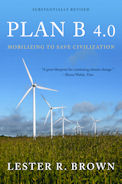
And a third must-read: Plan B 4.0

Lester Brown, the prophet who keeps shouting LOVE at the heart of the unlistening world, writes about our global Ponzi economy:
Our mismanaged world economy today has many of the characteristics of a Ponzi scheme. A Ponzi scheme takes payments from a broad base of investors and uses these to pay off returns. It creates the illusion that it is providing a highly attractive rate of return on investment as a result of savvy investment decisions when in fact these irresistibly high earnings are in part the result of consuming the asset base itself. A Ponzi scheme investment fund can last only as long as the flow of new investments is sufficient to sustain the high rates of return paid out to previous investors. When this is no longer possible, the scheme collapses—just as Bernard Madoff’s $65-billion investment fund did in December 2008.


Although the functioning of the global economy and a Ponzi investment scheme are not entirely analogous, there are some disturbing parallels. As recently as 1950 or so, the world economy was living more or less within its means, consuming only the sustainable yield, the interest of the natural systems that support it. But then as the economy doubled, and doubled again, and yet again, multiplying eightfold, it began to outrun sustainable yields and to consume the asset base itself.

In a 2002 study published by the U.S. National Academy of Sciences, a team of scientists concluded that humanity’s collective demands first surpassed the earth’s regenerative capacity around 1980. As of 2009 global demands on natural systems exceed their sustainable yield capacity by nearly 30 percent. This means we are meeting current demands in part by consuming the earth’s natural assets, setting the stage for an eventual Ponzi-type collapse when these assets are depleted.

As of mid-2009, nearly all the world’s major aquifers were being overpumped. We have more irrigation water than before the overpumping began, in true Ponzi fashion. We get the feeling that we’re doing very well in agriculture—but the reality is that an estimated 400 million people are today being fed by overpumping, a process that is by definition short-term. With aquifers being depleted, this water-based food bubble is about to burst.

A similar situation exists with the melting of mountain glaciers. When glaciers first start to melt, flows in the rivers and the irrigation canals they feed are larger than before the melting started. But after a point, as smaller glaciers disappear and larger ones shrink, the amount of ice melt declines and the river flow diminishes. Thus we have two water-based Ponzi schemes running in parallel in agriculture.

And there are more such schemes. As human and livestock populations grow more or less apace, the rising demand for forage eventually exceeds the sustainable yield of grasslands. As a result, the grass deteriorates, leaving the land bare, allowing it to turn to desert. In this Ponzi scheme, herders are forced to rely on food aid or they migrate to cities.

Three fourths of oceanic fisheries are now being fished at or beyond capacity or are recovering from overexploitation. If we continue with business as usual, many of these fisheries will collapse. Overfishing, simply defined, means we are taking fish from the oceans faster than they can reproduce. The cod fishery off the coast of Newfoundland in Canada is a prime example of what can happen. Long one of the world’s most productive fisheries, it collapsed in the early 1990s and may never recover.

Paul Hawken, author of Blessed Unrest, puts it well: “At present we are stealing the future, selling it in the present, and calling it gross domestic product. We can just as easily have an economy that is based on healing the future instead of stealing it. We can either create assets for the future or take the assets of the future. One is called restoration and the other exploitation.” The larger question is, If we continue with business as usual—with overpumping, overgrazing, overplowing, overfishing, and overloading the atmosphere with carbon dioxide—how long will it be before the Ponzi economy unravels and collapses? No one knows. Our industrial civilization has not been here before.

Unlike Bernard Madoff’s Ponzi scheme, which was set up with the knowledge that it would eventually fall apart, our global Ponzi economy was not intended to collapse. It is on a collision path because of market forces, perverse incentives, and poorly chosen measures of progress.

In addition to consuming our asset base, we have devised some clever techniques for leaving costs off the books—much like the disgraced and bankrupt Texas-based energy company Enron did some years ago. For example, when we use electricity from a coal-fired power plant we get a monthly bill from the local utility. It includes the cost of mining coal, transporting it to the power plant, burning it, generating the electricity, and delivering electricity to our homes. It does not, however, include any costs of the climate change caused by burning coal. That bill will come later—and it will likely be delivered to our children. Unfortunately for them, their bill for our coal use will be even larger than ours.

When Sir Nicholas Stern, former chief economist at the World Bank, released his groundbreaking 2006 study on the future costs of climate change, he talked about a massive market failure. He was referring to the failure of the market to incorporate the costs of climate change in the price of fossil fuels. According to Stern, the costs are measured in the trillions of dollars. The difference between the market prices for fossil fuels and an honest price that also incorporates their environmental costs to society is huge.

As economic decisionmakers we all depend on the market for information to guide us, but the market is giving us incomplete information, and as a result we are making bad decisions. One of the best examples of this can be seen in the United States, where the gasoline pump price was around $3 per gallon in mid-2009. This reflects only the cost of finding the oil, pumping it to the surface, refining it into gasoline, and delivering the gas to service stations. It overlooks the costs of climate change as well as the costs of tax subsidies to the oil industry, the burgeoning military costs of protecting access to oil in the politically unstable Middle East, and the health care costs of treating respiratory illnesses caused by breathing polluted air. These indirect costs now total some $12 per gallon. In reality, burning gasoline is very costly, but the market tells us it is cheap.

The market also does not respect the carrying capacity of natural systems. For example, if a fishery is being continuously overfished, the catch eventually will begin to shrink and prices will rise, encouraging even more investment in fishing trawlers. The inevitable result is a precipitous decline in the catch and the collapse of the fishery.

Today we need a realistic view about the relationship between the economy and the environment. We also need, more than ever before, political leaders who can see the big picture. And since the principal advisors to government are economists, we need either economists who can think like ecologists or more ecological advisors. Otherwise, market behavior—including its failure to include the indirect costs of goods and services, to value nature’s services, and to respect sustainable-yield thresholds—will cause the destruction of the economy’s natural support systems, and our global Ponzi scheme will fall apart.

Adapted from Chapter 1, “Selling Our Future,” in Lester R. Brown, Plan B 4.0: Mobilizing to Save Civilization (New York: W.W. Norton & Company, 2009), available on-line at www.earthpolicy.org/index.php?/books/pb4.

Two to look for (from Chris Mooney's blog)

Two Coming Science Books

Yesterday at our MIT seminar, we heard a presentation from Michael Specter of The New Yorker, who will soon be out with a book called Denialism: How Irrational Thinking Hinders Scientific Progress, Harms the Planet, and Threatens Our Lives. I won’t say more about its contents yet, but suffice it to say that while this book may sound a lot like The Republican War on Science or Unscientific America–all the way down to the cover image with the trusty test tube/beaker–it actually appears to be pretty different, in a good way. I’m hoping I’ll have a lot more to say about it soon.

Meanwhile, I’ve just gotten an email notification that an even bigger scientific publishing event is happening: Timed for the IPCC-Copenhagen Summit, famed climatologist James Hansen will be out with a book entitled Storms of My Grandchildren: The Truth About the Coming Climate Catastrophe and Our Last Chance to Save Humanity, with an initial press run of 100,000 copies by Bloomsbury USA. I can’t yet seem to find a good image of the book, so I’ll do without one here–but it sounds like Hansen is going to upbraid the world, and the U.S., for moving way too slowly and lamely on climate change, and basically lay it all out there–if we don’t do something really radical, it’s going to be too late. No doubt this is going to be a very, very important statement.

So look out for both books…..