Showing posts with label Environmental Justice. Show all posts

Saturday, November 2, 2013

November Best Bet - "A Fierce Green Fire" - Salem Progressive Film Series, Nov. 14 7 p.m.


Thursday, November 14, 2013   7 p.m.   Grand Theatre

A FIERCE GREEN FIRE: The Battle for a Living Planet is the first big-picture exploration of the environmental movement – grassroots and global activism spanning fifty years from conservation to climate change. 

Directed and written by Mark Kitchell, Academy Award-nominated director of Berkeley in the Sixties, and narrated by Robert Redford, Ashley Judd, Van Jones, Isabel Allende and Meryl Streep, the film premiered at Sundance Film Festival 2012, has won acclaim at festivals around the world, and in 2013 begins theatrical release as well as educational distribution and use by environmental groups and grassroots activists.

Inspired by the book of the same name by Philip Shabecoff and informed by advisors like Edward O. Wilson, A FIERCE GREEN FIRE chronicles the largest movement of the 20th century and one of the keys to the 21st. It brings together all the major parts of environmentalism and connects them. It focuses on activism, people fighting to save their homes, their lives, the future – and succeeding against all odds.
The film unfolds in five acts, each with a central story and character:


  1. David Brower and the Sierra Club’s battle to halt dams in the Grand Canyon
  2. Lois Gibbs and Love Canal residents’ struggle against 20,000 tons of toxic chemicals
  3. Paul Watson and Greenpeace’s campaigns to save whales and baby harp seals
  4. Chico Mendes and Brazilian rubbertappers’ fight to save the Amazon rainforest
  5. Bill McKibben and the 25-year effort to address the impossible issue – climate change
Surrounding these main stories are strands like environmental justice, going back to the land, and movements of the global south such as Chipko in India and Wangari Maathai in Kenya. Vivid archival film brings it all back and insightful interviews shed light on the events and what they mean. The film offers a deeper view of environmentalism as civilizational change, bringing our industrial society into sustainable balance with nature.
Website


Speakers

Mark Kitchell | Producer, Writer, Director
Mark Kitchell is best known for Berkeley in the Sixties, which won the Sundance Audience Award in 1990, was nominated for an Academy Award, and won other top honors. It has become a well-loved classic, one of the defining documentaries about the protest movements of the 1960s. Kitchell went to NYU film school, where he made The Godfather Comes to Sixth St., a cinema verite look at his neighbors caught up in filming The Godfather II - for which he received another (student) Academy Award nomination.
Laura Stevens | Organizing Representative for the Sierra Club Beyond Coal campaign
Laura Stevens, Organizing Representative for the Sierra Club Beyond Coal campaign in Oregon and Southwest Washington, works with concerned citizens to stop coal export projects and towards a coal-free northwest. Laura, a native Oregonian, obtained her B.A. from DePauw University, and has spent the past six years organizing for a number of environmental, human rights, and labor groups. After Laura launched and led the Sierra Club Campuses Beyond Coal campaign at the University of North Carolina at Chapel Hill, UNC made a commitment to move their on- campus coal-fired power plant off of mountain-top removal mined coal immediately, and set a date to move the plant off of coal entirely. For more information on how you can help stop coal exports in Oregon, contact Laura at laura.stevens@sierraclub.org or visit www.coalfreeoregon.org.

Friday, August 17, 2012

Young Writers Contest from one of America's best magazines

Few magazines cause me to think about what a great and interesting read I've had as often as this one. My bride and I both comment about what an unusual magazine HCN is, and what a pleasure it is to see serious journalism on environmental issues that isn't always solemn, along with great photography.

If you know a young writer (2012 grads and later, down through HS), suggest that they peruse some issues of this fine publication and thinking about whether they have anything to offer on this topic:

In 600 words, describe why your heart is at home in the American West. Is being a Westerner a physical state, a frame of mind, an emotional experience? Is it something you earned? Something you were born into? A title conferred on you, or one you adopted on your own?

2012 Annual High Country News
Student Essay Contest

What does being a Westerner mean to you, and why do you consider yourself one?
"How I Became a Westerner"

Entry Deadline: Sept. 21,2012

Send essays to studentwriters@hcn.org. Visit hcn.org/edu for more information.

In 600 words, describe why your heart is at home in the American West. Is being a Westerner a physical state, a frame of mind, an emotional experience? Is it something you earned? Something you were born into? A title conferred on you, or one you adopted on your own?

The contest is open to all currently enrolled high school students and undergraduates at American schools, colleges and universities as well as 2012 graduates. Submissions must be original, unpublished work (the writing can have been published in a student publication). One entry per person, please.

Include your name, contact information, school name, and area of study with your submission.

The winning essay will appear in the upcoming HCN Books and Essays special issue and the writer will receive these backpacking essentials from MountainSmith:
  • Lookout Backpack
  • Poncha 35 Degree Sleeping Bag
  • Rhyolite Trekking Poles
High Country News 119 Grand Avenue, PO Box 1090, Paonia, CO 81428
Related articles
Enhanced by Zemanta

Tuesday, March 29, 2011

US policy makes biofools of us all

UPDATE: No surprise, Secretary of Ag Tom Vilsack wins it going away.

As food prices rise in America and around the world, Secretary Vilsack does not seem to think it matters that almost 40 percent of U.S. corn production goes to manufacture ethanol for guzzling cars.1 U.S. and EU biofuels policies contribute to food price volatility. By supporting these policies, Secretary Vilsack is helping industrial farmers make a few extra bucks per bushel.

Secretary Vilsack says his support for ethanol subsidies is justified by his concern that farmers are under-appreciated.3 However, ethanol subsidies go to refiners, not farmers, and less than 20 percent of America’s ethanol is produced in farmer-owned refineries.3 The other 80 percent is produced by conglomerates like Archer Daniels Midland (ADM) and Big Oil companies. Secretary Vilsack could advocate for changes to our agricultural policies that help small, sustainable family farms grow healthy and nutritious food, but instead he supports Band-Aid policies that ultimately serve the interests of corporations.

Tell Secretary Vilsack just how much the industrial biofuels manufacturers appreciate his support… and just how much his shilling hurts our climate and the push for truly clean energy.

And we won’t even get into the fact that biofuels do nothing to reduce America’s dependence on oil. Converting all American corn acreage to ethanol production would only produce enough fuel to displace 12 percent of gasoline consumption -- and by even less if production costs are included.4 We may never know why Secretary Vilsack loves the ethanol industry so much, but we do know that he is a Biofool!

1. Kripke, Gawain. Defiant ethanol support weakens US case on food. Financial Times. 3/25/2011. http://www.ft.com/cms/s/0/2c7637d0-566d-11e0-84e9-00144feab49a.html#axzz1ICiDB9YL

2. Klein, Ezra. Vilsack: “I took it as a slam on rural America.” 3/8/2011. http://voices.washingtonpost.com/ezra-klein/2011/03/vilsack_i_took_it_as_a_slam_on.html

3. “ACE Commends Farmer-Owned Ethanol Plants for Contributions to U.S. Ethanol Industry.” 3/18/2010. http://www.ethanol.org/pdf/contentmgmt/ACE_commends_farmer_plants_Natl_Ag_Week_31810.pdf

4. Meyer, Patrick E. Biofuel Review Part 3: Land Availablity, Conversion and Deforestation. 1/2010. http://www.todaysengineer.org/2010/Jan/Biofuels-pt3.asp

Finally! A dawning recognition that the biofuels subsidy system is simply driving up hunger in America and around the world, while making climate destabilization worse.

The only thing we do by making hungry people compete with gas tanks for the energy content is to prop up the liquid-fueled vehicle paradigm a tiny bit longer, at an extraordinary cost.
Dear Friend,
Biofool of the year
Who wil be the 2011 Biofool of the Year? Cast your vote now!

It’s almost that time of year again: Biofools Day!

For the last two years, we have asked you to vote for the biggest Biofool to be announced on Biofools Day, April 1. A Biofool is a person who has bought the biofuel industry’s corny story, ignoring the growing evidence that biofuels are not-so-awesome after all.

Last year, thousands of you selected Representative Colin Peterson (D-Minn.) as 2010 Biofool of the Year. Rep. Peterson won for holding the Waxman-Markey climate bill hostage until he could get a provision inserted to repeal a law that directed the EPA to account for all greenhouse gas emissions related to the production of biofuels. In the contest's inaugural year, activists voted for Chairman Hugh Grant of Monsanto. He won because by supporting the biofuel boon, Monsanto stood to rake in billions from its genetically engineered products.

This year, we're calling out five major biofuel proponents, including government representatives and industry spokespeople, as this year's top Biofools.

Take a look and see who made the grade. Then vote to select this year’s biggest Biofool.

Contrary to what the industry says, the production of industrial biofuels releases significant amounts of carbon and greenhouse gases into the air. The majority of biofuel used in the United States today is corn ethanol, which produces more global warming pollution than gasoline. Like other industrial agricultural products, biofuel production is harmful to the land, water, and wildlife. To make matters worse, biofuel subsidies and handouts hinder food security and cost taxpayers billions.

Who will be this year's biofool? Vote now and have your say.


Despite huge environmental, social and economic concerns, biofuels still enjoy the fierce backing of industries -- like agribusiness, biotech, and oil -- that make billions by selling the myth that biofuels are clean, efficient, and reduce American dependence on foreign oil. Somehow, these powerful corporations are able hoodwink influential people to support their dirty industry – and these Biofools then use their different soap boxes to promote policies that in turn support dirty biofuels.

By voting today, you are sending the message that you are not fooled by the industry's propaganda.

Once the votes are in, we'll send you the results and announce this year’s winning Biofool to the public on April 1, Biofools Day.

But we won't stop there. We'll continue to put pressure on the biggest Biofools and we'll need your help to do this. We want you to be part of our work to end subsidies for Biofools -- ahem, biofuels --and ensure these subsidies expire like they should have done last year.

Click here to see the nominees and vote. Then get your friends to vote too.

Sincerely,
Kate McMahon
Biofuels Campaign Coordinator, Friends of the Earth

Note: Our neighbor blog to the south, "Goal One Coalition," has a great post on this subject.

Tuesday, October 19, 2010

"Living Downstream" -- Thursday, 10/21, Salem Cinema

The Earth flag is not an official flag, since ...Image via Wikipedia"And further, by these, my son, be admonished: of making many books [there is] no end; and much study [is] a weariness of the flesh." -- Ecclesiastes, 12:12

There are many many many books on the environment, and many many many more on health.

And, with few exceptions, nearly even one of those wearying books pales before the disturbing, poignant and powerful book by ecologist and poet Sandra Steingraber, author of, most prominently, "Living Downstream: An ecologist's personal investigation of cancer and the environment."

Haven't seen the movie yet, but it's at the Salem Film Festival Thursday night, and if it's 1/1000th as good as her book, it would be a crying shame to miss it. Support the Salem Film Festival and its work in bringing important movies to Salem -- come see "Living Downstream," and remember that, as Steingraber shows in her moving, unforgettable book, we all live downstream.

Great interview with her here.
Enhanced by Zemanta

Friday, January 29, 2010

Calendar: Ghosts in your Genes

The structure of part of a DNA double helixImage via Wikipedia

Many good things happening at the Salem Public Library, but this one stands out:
Friends of Straub Environmental Learning Center
Lecture Series

Environment and Disease: The Ghosts in Your Genes

7 p.m. Thursday, February 25, Loucks Auditorium

Dr. Michael Skinner of Washington State University will provide a general overview of endocrine disruptors. He will talk about how his research has shown that environmental factors change the expression of our DNA – but don’t change the underlying DNA sequences – and how these lasti ng eff ects can be passed
on from generation to generation.

Dr. Michael Skinner‘s research has been highlighted in BBC and PBS documentaries and selected in the top 100 discoveries in 2005 and 2007 by Discover.

The presentation is free and open to the public through support from the Charla Richards-Kreitzberg Charitable Foundation, the Salem Foundation, Salem Public Library, City of Salem, and Marion Soil and Water Conservation District. For more
information, contact the Friends of Straub Environmental Learning Center at 503- 391-4145 or visit www.fselc.org.

The Friends of Straub Environmental Learning Center is a Salem-based, nonprofit organization dedicated to environmental education.

Reblog this post [with Zemanta]

Wednesday, October 14, 2009

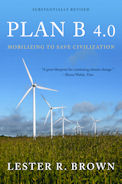
And a third must-read: Plan B 4.0

Lester Brown, the prophet who keeps shouting LOVE at the heart of the unlistening world, writes about our global Ponzi economy:
Our mismanaged world economy today has many of the characteristics of a Ponzi scheme. A Ponzi scheme takes payments from a broad base of investors and uses these to pay off returns. It creates the illusion that it is providing a highly attractive rate of return on investment as a result of savvy investment decisions when in fact these irresistibly high earnings are in part the result of consuming the asset base itself. A Ponzi scheme investment fund can last only as long as the flow of new investments is sufficient to sustain the high rates of return paid out to previous investors. When this is no longer possible, the scheme collapses—just as Bernard Madoff’s $65-billion investment fund did in December 2008.


Although the functioning of the global economy and a Ponzi investment scheme are not entirely analogous, there are some disturbing parallels. As recently as 1950 or so, the world economy was living more or less within its means, consuming only the sustainable yield, the interest of the natural systems that support it. But then as the economy doubled, and doubled again, and yet again, multiplying eightfold, it began to outrun sustainable yields and to consume the asset base itself.

In a 2002 study published by the U.S. National Academy of Sciences, a team of scientists concluded that humanity’s collective demands first surpassed the earth’s regenerative capacity around 1980. As of 2009 global demands on natural systems exceed their sustainable yield capacity by nearly 30 percent. This means we are meeting current demands in part by consuming the earth’s natural assets, setting the stage for an eventual Ponzi-type collapse when these assets are depleted.

As of mid-2009, nearly all the world’s major aquifers were being overpumped. We have more irrigation water than before the overpumping began, in true Ponzi fashion. We get the feeling that we’re doing very well in agriculture—but the reality is that an estimated 400 million people are today being fed by overpumping, a process that is by definition short-term. With aquifers being depleted, this water-based food bubble is about to burst.

A similar situation exists with the melting of mountain glaciers. When glaciers first start to melt, flows in the rivers and the irrigation canals they feed are larger than before the melting started. But after a point, as smaller glaciers disappear and larger ones shrink, the amount of ice melt declines and the river flow diminishes. Thus we have two water-based Ponzi schemes running in parallel in agriculture.

And there are more such schemes. As human and livestock populations grow more or less apace, the rising demand for forage eventually exceeds the sustainable yield of grasslands. As a result, the grass deteriorates, leaving the land bare, allowing it to turn to desert. In this Ponzi scheme, herders are forced to rely on food aid or they migrate to cities.

Three fourths of oceanic fisheries are now being fished at or beyond capacity or are recovering from overexploitation. If we continue with business as usual, many of these fisheries will collapse. Overfishing, simply defined, means we are taking fish from the oceans faster than they can reproduce. The cod fishery off the coast of Newfoundland in Canada is a prime example of what can happen. Long one of the world’s most productive fisheries, it collapsed in the early 1990s and may never recover.

Paul Hawken, author of Blessed Unrest, puts it well: “At present we are stealing the future, selling it in the present, and calling it gross domestic product. We can just as easily have an economy that is based on healing the future instead of stealing it. We can either create assets for the future or take the assets of the future. One is called restoration and the other exploitation.” The larger question is, If we continue with business as usual—with overpumping, overgrazing, overplowing, overfishing, and overloading the atmosphere with carbon dioxide—how long will it be before the Ponzi economy unravels and collapses? No one knows. Our industrial civilization has not been here before.

Unlike Bernard Madoff’s Ponzi scheme, which was set up with the knowledge that it would eventually fall apart, our global Ponzi economy was not intended to collapse. It is on a collision path because of market forces, perverse incentives, and poorly chosen measures of progress.

In addition to consuming our asset base, we have devised some clever techniques for leaving costs off the books—much like the disgraced and bankrupt Texas-based energy company Enron did some years ago. For example, when we use electricity from a coal-fired power plant we get a monthly bill from the local utility. It includes the cost of mining coal, transporting it to the power plant, burning it, generating the electricity, and delivering electricity to our homes. It does not, however, include any costs of the climate change caused by burning coal. That bill will come later—and it will likely be delivered to our children. Unfortunately for them, their bill for our coal use will be even larger than ours.

When Sir Nicholas Stern, former chief economist at the World Bank, released his groundbreaking 2006 study on the future costs of climate change, he talked about a massive market failure. He was referring to the failure of the market to incorporate the costs of climate change in the price of fossil fuels. According to Stern, the costs are measured in the trillions of dollars. The difference between the market prices for fossil fuels and an honest price that also incorporates their environmental costs to society is huge.

As economic decisionmakers we all depend on the market for information to guide us, but the market is giving us incomplete information, and as a result we are making bad decisions. One of the best examples of this can be seen in the United States, where the gasoline pump price was around $3 per gallon in mid-2009. This reflects only the cost of finding the oil, pumping it to the surface, refining it into gasoline, and delivering the gas to service stations. It overlooks the costs of climate change as well as the costs of tax subsidies to the oil industry, the burgeoning military costs of protecting access to oil in the politically unstable Middle East, and the health care costs of treating respiratory illnesses caused by breathing polluted air. These indirect costs now total some $12 per gallon. In reality, burning gasoline is very costly, but the market tells us it is cheap.

The market also does not respect the carrying capacity of natural systems. For example, if a fishery is being continuously overfished, the catch eventually will begin to shrink and prices will rise, encouraging even more investment in fishing trawlers. The inevitable result is a precipitous decline in the catch and the collapse of the fishery.

Today we need a realistic view about the relationship between the economy and the environment. We also need, more than ever before, political leaders who can see the big picture. And since the principal advisors to government are economists, we need either economists who can think like ecologists or more ecological advisors. Otherwise, market behavior—including its failure to include the indirect costs of goods and services, to value nature’s services, and to respect sustainable-yield thresholds—will cause the destruction of the economy’s natural support systems, and our global Ponzi scheme will fall apart.

Adapted from Chapter 1, “Selling Our Future,” in Lester R. Brown, Plan B 4.0: Mobilizing to Save Civilization (New York: W.W. Norton & Company, 2009), available on-line at www.earthpolicy.org/index.php?/books/pb4.
Saturday, August 15, 2009