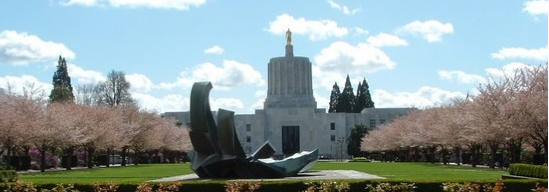
Mayors back parents seizing control of schools
By Stephanie Simon
Hundreds of mayors from across the United States called for new laws letting parents seize control of low-performing public schools and fire the teachers, oust the administrators or turn the schools over to
private management.
http://www.reuters.com/article/2012/06/18/us-usa-education-trigger-idUSBRE85H0J620120618
Showing posts with label Schools. Show all posts
Showing posts with label Schools. Show all posts
Saturday, June 30, 2012


Monday, June 25, 2012
Monday, May 7, 2012
More on schools and their willful blindness to the impending changes
http://www.energybulletin.net/stories/2012-04-04/education-post-carbon-world
Imagine the world decades from now, during an era of collapse to a post-carbon world with a new and changing climate, with former fossil-fuel addicts thrashing around trying to find food and water and other stuff, but not understanding who/what caused all this pain and suffering or what to do about it. That's a world in which the education system has failed miserably to do its most important job: prepare people for the future based on a factual understanding of the past, combined with tools for the real (not virtual) future. The author of this article is one of the damn few educators who gets it.
cheers anyway,
Tooj
Sunday, May 6, 2012
Even after bankruptcy, trapped by student debt
http://www.sacbee.com/2012/04/25/4441598/even-after-bankruptcy-trapped.html?source=Patrick.net
This is ultimately going to be what forces schools to change from top to bottom -- that the universities and colleges are producing thousands of people who are not prepared to grapple with any of the significant problems and challenges facing their own society, much less the plight of people in less advantaged places.
Eventually word gets out, and the market for overpriced degrees collapses, at which point the absurdity of making high-school nothing but a college-test-prep program will be evident for all to see.
This is ultimately going to be what forces schools to change from top to bottom -- that the universities and colleges are producing thousands of people who are not prepared to grapple with any of the significant problems and challenges facing their own society, much less the plight of people in less advantaged places.
Eventually word gets out, and the market for overpriced degrees collapses, at which point the absurdity of making high-school nothing but a college-test-prep program will be evident for all to see.
Saturday, May 5, 2012
What if schools were not school?
.
What if schools were not school?
I just got home for the weekend. Last week, I was in Stockholm, speaking at SETT. Monday, I fly to Switzerland to speak at the St. Gallen Symposium. And on Saturday, UnCollege Research Apprentice Marlon Paine will be moving to San Francisco to start working fulltime! We've been working on a lot of exciting new programs and material, which includes the just-launched UnCollege Hackademic Camp:
From July 30th to August 3rd we will bring ten of the brightest young minds from around the world together in San Francisco for an intense human accelerator. They will learn from and connect with a network of thought-leaders, educators, entrepreneurs, investors, and successful dropouts. But more importantly, we will work together to create solutions to some of the world's most pressing problems—namely education. This is a chance not only to learn from experts and increase your own knowledge and skills, but also to make an impact—solving issues with those who have the power to make changes. If you think you're a hackademic, we encourage you to join us! To learn more and apply, click here.
********
What if schools were not schools? Insight Labs, a Chicago-based think tank, recently posed this question. They brought together experts from around the world to discuss the issues with the public education system in America. Their conclusion? What if schools were fundamentally different entities, focusing not on the output of students—i.e. test scores, as schools are currently measured by—and instead on cultivating citizens: what if schools were "the birthplace of the citizen ideal?"
But let's backtrack. A recent report from the Center for American Progress illuminated many of the current failures of the education system. Federal spending has increased three fold since 1970, while dropout rates and academic performance have changed insignificantly. America, in comparison to other developed countries, ranks only mediocrely when it comes to education, yet it spends more per student than any other country except Luxembourg.
The Center for American Progress suggests several ways to make budgets more effective, but I think the problem is bigger than that. School currently mass-produces students to be competitive, individualistic, and value numbers rather than tangible results. The goal of American schools seems to be to create a population that can compete with other countries and maintain America's economic supremacy. But this often comes at the neglect of the community.
What if the emphasis was instead on making the entire world better as a whole? What if the purpose of schools changed from producing the highest test scores to a place where kids learned to be a member of their community—focusing on cooperation, not competition? In the words of GOOD Magazine's Liz Dwyer, who recently wrote an article about this issue, what if school were a place where students "learn to live a life of selfless service on behalf of the community; it's where (students) find the path of virtue, subordinating inner self-interest as individuals to the interests of the community, the good of the whole." What if schools were, essentially, "the birthplace of the citizen ideal?"
Imagine the impact of students dedicating over twelve years of their lives not to learning information geared towards a test, but learning about, and working on, the challenges the world currently faces—starting at a community level. The results would be a tangible difference in their own community, not a piece of paper with numbers and letter-grades. What if students had the ability to work on projects that interested them, and worked with teachers to integrate the learning of necessary skills into their projects—learning how to apply them in the real world?
This would obviously be a big change: it would take a whole community—educators, businesses, parents, etc.—to work with the school system to solve these problems. But the results would be exponentially greater that the cost: an entire population of students working to better the community. School could be, as stated in Insight Labs School is not School Manifesto, "a dynamic social engine for entire towns and cities that drive every citizen toward a higher, greater good: the public interest." Students discover their interests, how to solve problems, and use this knowledge not just for themselves, but to create a better community. Students work as, and learn to be citizens, not detached individuals.
At this point, the entire college question would be irrelevant: by the time a student graduates from high school, they will have experienced the real world, learned their passions, their skills, and put them into action. The ideals of apprenticeships and entrepreneurship would be engrained into students before college applications were due. Students that want to start businesses could turn that into their lesson plan; students that want to be writers could actually write what they want to. And then, inevitably, these students would learn how to describe and explain what they have learned—a skill so valuable, yet completely neglected by traditional schooling.
This plan is extremely idealistic—turning the entire education system on its head. But that's what we need. We need drastic changes to the current system so that it works with, and not against, the students. Imagine what the entire population of K-12 students could accomplish for their communities, and themselves, if instead of being stuck in a classroom, their time was spent creating value in their communities. The only thing holding us back are the deep roots of the current system—people are terrified to uproot, or even challenge it.
Apprenticeship programs and fellowships are starting to pop up, offering students a valuable alternative to college. The mainstream is catching on: I'm going to speak with NBC about these opportunities next week.
What if these alternative programs became the education system?
If you enjoyed this newsletter, please forward it to friends and encourage them to join the movement at uncollege.org!
Hack on,
-Dale

Friday, May 4, 2012
The Advantage of Self-Education
JohnGearLaw.com -web 971-266-GEAR -office & 24-hr message line
888-782-0181 -fax 503-339-7787 -office line
Begin forwarded message:
From: UnCollege <dale@uncollege.org>
Date: February 25, 2012 3:29:03 AM PST
To: John Gear <John@JohnGearLaw.com>
Subject: The Advantage of Self-Education
Reply-To: UnCollege <dale@uncollege.org>
The Advantage of Self-Education
View it in your browser.
Are we all capable of learning?
When I met filmmaker Astra Taylor in Brooklyn in December, she raised the same question as she did in her speech at the Walker Center: "What makes society so sure most people couldn't handle self-education?"Astra was unschooled until the age of thirteen, drifted in and out of high school, tried out Brown University but didn't like it, and eventually ended up with a Master's from The New School in New York.She, like me and many other unschoolers, has often had people say "Unschooling worked for you, but admit it won't work for everyone." In her talk, Astra points out that this is a compliment in disguise. "On one hand," Astra says, "it implies that my family is gifted. On the other hand, it implies that most people are not gifted, and they need to be guided, molded, tested, and inspected."I don't think anyone needs to be guided, molded, tested, or inspected. Over the course of the last seven months working on my book, I've talked to people who have come from every background imaginable to do everything imaginable. I've talked to individuals who grew up in the slums of Dehli and middle class Londoners who have gone on to do everything from become world-renowned DJs to senior executives at British Petroleum.Anecdotally, it seems that where you come from, the background of your parents, your socio-economic level, and so on has little to do with your success outside school. However, all of these factors are a huge determinant upon your success inside school.There is data to support this thesis. The first study I want to highlight was done in the United Kingdom in the late 1990's:Children taught at home significantly outperform their contemporaries who go to school, the first comparative study has found. It discovered that home-educated children of working-class parents achieved considerably higher marks in tests than the children of professional, middle-class parents and that gender differences in exam results disappear among home-taught children.Homeschool Legal Defense Association provides a nice summary a more recent study they commissioned in 2008 on their website. Some of the highlights include:Whether either parent was a certified teacher did not matter.Certified (i.e., either parent ever certified)—87th percentile
Not certified (i.e., neither parent ever certified)—88th percentileSpending on home education made little difference.Spent $600 or more on the student—89th percentile
Spent under $600 on the student—86th percentileTo be sure, there is a delta between 86th and 89th percentile. But that delta is quite small when the national average is the 50th percentile.*********I'm writing about this data because I've been reviewing in preparation to debate Vivek Wadhwa next Wednesday at TED in Long Beach. Vivek and I have debated before, both on TechCrunch and NPR, and we'll have a lively time next week.Vivek likes to make accusations like home or unschooling only works for the elite. No, I say. Everyone is capable of self-education regardless of their socio-economic background, parental education level, gender, or whatever other ways Vivek considers me privileged.Yes, both my parents have college degree, but they aren't wealthy. Money was tight as a child. I started selling fruit from our backyard to make money when I was 10. I subsequently delivered flowers and sold photocards to pay for my self-education.This time when I spar with Vivek I have data to refute his accusations.If you enjoyed this week's newsletter, please forward it to a friend, post it on Facebook, or Tweet it.Keeping on hacking,Dale

Thursday, February 23, 2012
Bring the joy back to teaching and learning
Best thing on Ed for some time. Sadly, it is retired educators who seem to be able to stand up to the charlatans like Arne Duncan and the No Child Left Behind Snake Oil chorus.
http://www.oregonlive.com/opinion/index.ssf/2012/02/bring_the_joy_back_to_teaching.html
http://www.oregonlive.com/opinion/index.ssf/2012/02/bring_the_joy_back_to_teaching.html
Sunday, January 22, 2012
Must-read: why we need to massively overhaul school and public health funding priorities
This piece from the NY Times (and native Oregonian) Bill Kristof two Sundays ago is a guaranteed finalist as one of the most important op-eds of 2012 already. As the states and cities like Salem find themselves increasingly bankrupted by physical constraints making growth economics a distant memory, never to return, we need to spend more and more (of the less and less we can afford) on kids at the most important years for brain development. Essentially, the sooner the better.
Instead our politics is driving us exactly away from this strategy ... So we kill elementary school librarians and the highest performing elementary schools to preserve the funding for sports at the comprehensive mega high schools, despite the fact that we get a much greater return on the limited dollars the earlier they are spent in helping kids. We employ battalions of people to squander their energies on exhorting the children damaged by poverty to act like the children of the upper middle class. We ignore mounting evidence about the crucial roles of play and physical activity and turn early grades into mini college test prep centers.
Kristof:
Perhaps the most widespread peril children face isn't guns, swimming pools or speeding cars. Rather, scientists are suggesting that it may be "toxic stress" early in life, or even before birth.
This month, the American Academy of Pediatrics is issuing a landmark warning that this toxic stress can harm children for life. I'm as skeptical as anyone of headlines from new medical studies (Coffee is good for you! Coffee is bad for you!), but that's not what this is.
Rather, this is a "policy statement" from the premier association of pediatricians, based on two decades of scientific research. This has revolutionary implications for medicine and for how we can more effectively chip away at poverty and crime.
Toxic stress might arise from parental abuse of alcohol or drugs. It could occur in a home where children are threatened and beaten. It might derive from chronic neglect — a child cries without being cuddled. Affection seems to defuse toxic stress — keep those hugs and lullabies coming! — suggesting that the stress emerges when a child senses persistent threats but no protector.
Cues of a hostile or indifferent environment flood an infant, or even a fetus, with stress hormones like cortisol in ways that can disrupt the body's metabolism or the architecture of the brain.
The upshot is that children are sometimes permanently undermined. Even many years later, as adults, they aremore likely to suffer heart disease, obesity, diabetes and other physical ailments. They are also more likely to struggle in school, have short tempers and tangle with the law.
The crucial period seems to be from conception through early childhood. After that, the brain is less pliable and has trouble being remolded.
"You can modify behavior later, but you can't rewire disrupted brain circuits," notes Jack P. Shonkoff, a Harvard pediatrician who has been a leader in this field. "We're beginning to get a pretty compelling biological model of why kids who have experienced adversity have trouble learning."
This new research addresses an uncomfortable truth: Poverty is difficult to overcome partly because of self-destructive behaviors. Children from poor homes often shine, but others may skip school, abuse narcotics, break the law, and have trouble settling down in a marriage and a job. Then their children may replicate this pattern.
Liberals sometimes ignore these self-destructive pathologies. Conservatives sometimes rely on them to blame poverty on the poor.
The research suggests that the roots of impairment and underachievement are biologically embedded, but preventable. "This is the biology of social class disparities," Dr. Shonkoff said. "Early experiences are literally built into our bodies."
The implication is that the most cost-effective window to bring about change isn't high school or even kindergarten — although much greater efforts are needed in schools as well — but in the early years of life, or even before birth.
"Protecting young children from adversity is a promising, science-based strategy to address many of the most persistent and costly problems facing contemporary society, including limited educational achievement, diminished economic productivity, criminality, and disparities in health," the pediatrics academy said in its policy statement.
One successful example of early intervention is home visitation by childcare experts, like those from the Nurse-Family Partnership. This organization sends nurses to visit poor, vulnerable women who are pregnant for the first time. The nurse warns against smoking and alcohol and drug abuse, and later encourages breast-feeding and good nutrition, while coaxing mothers to cuddle their children and read to them. This program continues until the child is 2.
At age 6, studies have found, these children are only one-third as likely to have behavioral or intellectual problems as others who weren't enrolled. At age 15, the children are less than half as likely to have been arrested.
Evidence of the importance of early experiences has been mounting like snowflakes in a blizzard. For example, several studies examined Dutch men and women who had been in utero during a brief famine at the end of World War II. Decades later, those "famine babies" had more trouble concentrating and more heart disease than those born before or after.
Other scholars examined children who had been badly neglected in Romanian orphanages. Those who spent more time in the orphanages had shorter telomeres, a change in chromosomes that's a marker of accelerated aging. Their brain scans also looked different.
The science is still accumulating. But a compelling message from biology is that if we want to chip away at poverty and improve educational and health outcomes, we have to start earlier. For many children, damage has been suffered before the first day of school.
As Frederick Douglass noted, "It is easier to build strong children than to repair broken men."

Friday, January 13, 2012
Friday Food for Thought: On Education
Great "Museletter" by Richard Heinberg. Just an excerpt to whet your appetite:
The radicals agree with some of Dewey’s ideals—especially the desire for students to develop critical thinking abilities. However, they question whether Dewey, in trying to humanize the American public school system, was working against its original and inherent purposes. The basic idea of the public school was (and is) to apply the routines and discipline of factory work to learning, and thus to train armies of children for service in the industrial system. Dewey was trying to make the institution serve ends other than these, and was therefore bound to fail. The appeal of the conservative agenda is, and has always been, simply that its vision of the public schools’ purpose is closest to the historical reality. For educational radicals, therefore, the critique of schooling is inseparable from a critique of modern industrial, capitalist, corporatist society itself. If the factory system requires us to turn human beings into machines, then should we not question industrial production?
Along the way, radical educationists point out that children, in addition to being taught the hidden curriculum of fragmentation and routinization, are also taught an overt curriculum of lies and half-truths that make real citizenship problematic. Children are taught a Eurocentric rendition of world history, and a sanitized version of American history, both cleansed of any taint of class struggle. Without certain key bits of information it is virtually impossible to understand why the world is the way it is. For example, it is impossible to understand American history unless we begin by acknowledging that the country was founded on genocide and slavery, and that whatever freedoms we enjoy were won by ordinary people organizing themselves and demanding reforms. To regard Columbus as a hero (as is still commonly done in many grade schools) is to ignore the evidence of his own diaries, which clearly portray him as a mass murderer, thief, torturer, extortionist, and conscious initiator of what would grow to become the largest instance of genocide in world history. It is also helpful to know that other American “heroes” like John Adams (the second President) and John Jay (the first Chief Justice of the Supreme Court) opposed the very idea of democracy and believed that “those who own the country should govern it.” Of course, information like this might encourage some students to question the political and economic status quo, and that is no doubt why it is omitted. But the resulting eviscerated history curriculum is not only misleading and confusing; it is also utterly boring.
Finally, the radicals point out that if any part of the real purpose of formal schooling is to help children learn, then there are much better ways of accomplishing that goal. After recounting how compulsory schooling originated in the State of Massachusetts around 1850 amid much resistance (“the last outpost in Barnstable on Cape Cod not surrendering its children until the 1880s, when the area was seized by militia and children marched to school under guard”), Gatto tells us:
Senator Ted Kennedy’s office released a paper not too long ago claiming that prior to compulsory education the state literacy rate was ninety-eight percent, and after it the figure never exceeded ninety-one percent. Here is another curiosity to think about. The home-schooling movement has quietly grown to a size where one and a half million young people are being educated entirely by their own parents; last month the education press reported the amazing news that children schooled at home seem to be five or even ten years ahead of their formally trained peers in their ability to think.
Gatto recalls the one-room schools common to rural America in the late nineteenth and early twentieth centuries, where children of all ages learned cooperatively, mostly teaching one another. This, according to the radicals, is an example of how learning could be facilitated. Instead of large, state-run bureaucracies, they say, we need small, local schools organized primarily by parents. Rather than being segregated by age, older children should learn responsibility by teaching younger kids. Rather than learning a state-mandated curriculum, students should pursue their spontaneous interests.
how we learn
It is in the discussion of the learning process that radical educational theory has made its most telling points. At the base of popular support for the very idea of schooling lies the assumption that schools help kids learn. If that assumption turns out to be unfounded, then the entire project is open to question. . . .
Saturday, January 7, 2012
Another Cognitive Benefit for Musicians, Athletes - Miller-McCune
As Salem-Keizer Schools continues to sacrifice the things that make schools work on the altar of standardized tests:
. . . The researchers speculate that musicians learn to think in terms of spatial relationships “because notes are coded in terms of their spatial positions.” This makes intuitive sense. A musician, like an athlete, instinctively learns to navigate through space: one reads notes on a staff, while another masters the parameters of a tennis court or football field.
While this one small study is hardly conclusive, it provides more evidence of the drawbacks of a basics-only approach to education. Such an approach ignores the ways important mental processes are enhanced by learning that occurs outside the core curriculum. This research suggests, in the words of Pietsch and Jansen, that “playing an instrument or a sport for many years has an enhancing effect on a specific cognitive task” — one that confers real-world benefits.
Monday, January 2, 2012
Unhappy birthday
On my birthday last fall, Common Dreams posted this painful but all-too-accurate article about the corporate assault on public schools by David Sirota. Excerpt:
"Let's hope the fiscal crisis doesn't get better too soon. It'll slow down reform." -- Tom Watkins, a consultant, summarizes the corporate education reform movement's current strategy to the Sunday New York Times.The Shock Doctrine, as articulated by journalist Naomi Klein, describes the process by which corporate interests use catastrophes as instruments to maximize their profit. Sometimes the events they use are natural (earthquakes), sometimes they are human-created (the 9/11 attacks) and sometimes they are a bit of both (hurricanes made stronger by human-intensified global climate change). Regardless of the particular cataclysm, though, the Shock Doctrine suggests that in the aftermath of a calamity, there is always corporate method in the smoldering madness - a method based in Disaster Capitalism.(Monkey Business Images via Shutterstock)
Though Klein's book provides much evidence of the Shock Doctrine, the Disaster Capitalists rarely come out and acknowledge their strategy. That's why Watkins' outburst of candor, buried in this front-page New York Times article yesterday, is so important: It shows that the recession and its corresponding shock to school budgets is being used by corporations to maximize revenues, all under the gauzy banner of "reform." . . .
Tuesday, December 27, 2011
Talking back to the testing maniacs
A Texas school superintendent takes on Arne Duncan & Barack Obama
John Kuhn - Let me speak for all public school educators when I say unequivocally: We will. We say send us your poor, send us your homeless, the children of your afflicted and addicted. Send us your kids who don't speak English. Send us you special-needs children, we will not turn them away.
But I tell you today, public school teacher, you will fail to take the shattered children of poverty and turn them into the polished products of the private schools. You will be unacceptable, public school teacher. And I say that is your badge of honor. I stand before you today bearing proudly the label of unacceptable because I educate the children they will not educate.
Day after day I take children broken by the poverty our leaders are afraid to confront and I glue their pieces back together. I am unacceptable and proud of it.
The poorest Americans need equity, but our nation offers them accountability instead. They need bread, but we give them a stone. We address the soft bigotry of low expectations so that we may ignore the hard racism of inequity.
Standardized tests are a poor substitute for justice.
So I say to Arne Duncan and President Obama, go ahead and label me. I will march headlong into the teeth of your horrific blame machine and I will teach these kids. You give me my scarlet letter and I will wear it proudly, because I will never cull the children who need education the most so that my precious scores will rise.
I will not race to the top. I will stop like the Good Samaritan and lift hurting children out of the dirt. Let me lose your race, because I'm not in this for the accolades. I'm not in it for the money. I'm in it because it's right. I am in it because the children of Perrin, Texas need somebody like me in their lives.
Our achievement gap is an opportunity gap. Our education problem is a poverty problem. Test scores don't scream bad teaching. They scream about our nation's systematic neglect of children who live in the wrong zip codes.
Listen to me, Arne Duncan: It's poverty, stupid. And that's not an excuse, that's not an excuse, it's a diagnosis. We must as a nation stop assuaging the symptoms and start treating the disease.
Let me ask you a simple question: Where is adequate yearly progress for the politician? Will we have 100 percent employment by 2014? Will all the children have decent health care and roofs over their heads by their deadline? But wait. They don't have a deadline. They aren't racing anywhere, are they?
When will our leaders ensure that every American community offers children libraries and little leagues instead of drugs and delinquency? Lawmakers sent you into congressional districts that are rife with poverty, rife with crime, drug abuse and poor health care, but lawmakers will never take on the label of "legislatively unacceptable" because they do not share the courage of a common school teacher. I say let us label our lawmakers like they label teachers. Let us have a hard look at their data. Let us have merit pay in Congress.
Congressmen, politicians, if you want children that are lush, stop firing the gardeners and start paying the water bill. Politicians, your fingerprints are on these children. What have you done to help them pass their tests?
Saturday, September 3, 2011
Ravitch the Reformed Testmaniac
Diane Ravitch is a fascinating case, a highly educated and influential person who has a very rare trait: she is willing to admit a mistake, as when she now realizes that her support for the testmania was a tremendous error. Her book "The Death and Life of the American School System" is tremendous.

In their embrace of testing, Sparks Middle School, Aspire Antonio Maria Lugo Academy and Wilmington Middle School reflect the data-driven approach to education that has dominated American schools since the No Child Left Behind Act was approved in 2001.That was from Miller-McCune magazine, a very interesting new magazine. More on schools from their website:
These schools swear by their system, but it’s a trend that many reformers decry, among them Diane Ravitch, the former assistant U.S. secretary of education. Ravitch, who initially supported No Child, now says the mandate for standardized testing is “part of the sickness of American education.” She chronicled her change of heart in The Death and Life of the Great American School System: How Testing and Choice are Undermining Education, a 2010 best-seller.
It’s not data that’s missing, Ravitch says. It’s vision. Testing should be used as a diagnostic tool, not to replace instruction. As she said in a recent interview with Miller-McCune, “You don’t spend your life to get a temperature of 98.6.”
“This heavy concentration on testing and scores distorts education,” Ravitch says. “The schools take time from the arts, history, foreign languages, civics and other important studies to get those scores up. Makes a school look better, but it has nothing to do with good education. … Are the kids in the school honest? Are they responsible? Are they willing to stand up to bullies and show courage?”
Back-to-School Basics
For a look at what public schools are doing to repair themselves on the cheap, check out the education stories found in the September-October 2011 issue of Miller-McCune, and when they’ll be available on Miller-McCune.com:
Teacher Collaboration Gives Schools Better Results, August 22
What Would Diane Ravitch Say?, August 22
Chicago Charter Schools Aim to Lift Urban Education, August 23
Bad Teachers Improving With Help From Peers, August 24
Showing Where Community Colleges Pass, Fail, August 25
Bridging the Budget Gap with Stolen Lunch Money, August 25
Teaching Religious Literacy in California’s Bible Belt, August 26
Checking Consumerism at the School Door, August 26
And … an online exclusive:
The Real Cheating Scandal of Standardized Tests
Wednesday, August 3, 2011
Let's use our heads for a change
 Image via WikipediaThe endless wars we are waging against EastAsia and EurAsia, with their long-forgotten rationales, are at least having their one usual benefit: we're learning lots about the way the human body works, as we pile up casualties.
One area that our concussive wars are educating us about is head injuries and traumatic brain injuries (TBI). And one thing we're learning as a result is that high-school sports head injuries are much more serious than we thought. Anyone who has seen Ali or other "punch drunk" boxers staggering around has seen the evidence of what shocks to the head do.
“Two studies, one of veterans and the other of former professional football players, provide new evidence that head injuries such as concussions are linked to dementia later in life and may make the brain more vulnerable to the development of symptoms characteristic of Alzheimer's disease.”We need to start applying this knowledge here, in Salem, right now. Every single sport, starting with football and soccer, needs to be examined for its concussion rates, and those sports with above-average concussion rates need to be critically assessed with an eye to answering this one question:
Can the concussions in this sport be eliminated entirely or drastically reduced, or shall the sport be dropped?There is no middle ground. With the mounting evidence all pointing the same way (that concussions are far more serious than we used to think), we are now on notice that we are causing kids ages 13-18, kids who cannot give informed consent, lifelong injuries, all in the name of entertainment. We have a duty to respond to these studies and to act to limit concussions to the maximum extent that is reasonably possible. Given that there are plenty of team and individual sports that teach all the same life lessons, there is no excuse for allowing kids to be exposed to high risks of suffering lifelong injuries as part of their education.
If you pay taxes here, you need to tell the S-K School Board that you want to know what they are doing to prevent concussions right now, and how they are going to avoid the huge legal bills down the road, the kinds of bills that accrue whenever institutions try to ignore evidence that what they are doing harms kids.

Tuesday, June 21, 2011
Another giveaway to oppose, quick!
Yikes! Hundreds of teachers and librarians laid off in Salem, many more across the state. Meanwhile, the Lege is seriously considering pumping money into a for-profit School-o'-Matic dealie that would profit one particular legislator greatly?!
URGENT ACTION: Stop Matt Wingard’s Bill From Coming Back From The Dead
Today, after much public outcry, legislators stood up for Oregon students and narrowly voted down Rep. Matt Wingard’s pet bill--House Bill 2301, which would divert tax dollars away from our public schools to for-profit virtual school vendors. The bill would have been a boon to Wingard and Connections Academy, the for-profit online charter school corporation that pays him.
Wingard’s self-dealing on this bill drew strong criticism from many Oregonians, who were angry that this bill was negotiated behind closed doors, all for the financial benefit of one legislator. This opposition kept the bill from passing today.
But now, some legislators are feeling pressure to change their votes. The Oregon House is likely to bring back the bill for another vote, as early as tomorrow (Tuesday) morning.
Click here to take action and tell legislators to vote no--AGAIN.
In a legislative session when critical bills can’t even get one vote in the House (BPA Ban, Tuition Equity, Foreclosure Protection), we’re seriously going to give Wingard a second vote on his self-dealing bill that would do real harm to our public schools that are already suffering? A second chance to line his own pockets with taxpayer dollars?
We’ve asked a lot of you in the past few weeks, and it’s made a big difference. With this important bill on the line, we need you to join us once again in telling our legislators to stand up for Oregon students and say NO to Matt Wingard’s self-serving bill—again.
Go here or call 1-800-332-2313 to be connected by phone.
Monday, June 20, 2011
For the Record: Oregon per-student spending LAGS the nation
 Image by Paradox 56 via FlickrThere's a bizarre current of debate in Oregon where the know-nothings allege that Oregon spends a bundle on schools, with lots of it going to "illegals" (the preferred term among the anti-public-schools crowd for the children of non-citizens, whether their parents are here with proper documents for entry or not).
 For the record then, here's a link to a very important piece worth filing away for the next time you're trapped with some gasbag who tells you that we would be fine if we just "got back to basics" and stopped providing so much lavish education, especially to the "illegals." An unusually good article in the local paper, by Betsy Hammond:
Oregon School Spending Trails National Average
PORTLAND, Ore. (AP) — Oregon has firmly established itself as a state that spends 7 percent less per student in public schools than the nation as a whole, according to federal data released last week.
Nationally, U.S. public schools spent $10,500 per student in 2008-09, the most recent year for which statistics have been nailed down for every school district. In Oregon, schools spent $9,800.
Oregon's pattern of spending 93 cents for every $1 spent nationally has become entrenched since 2002-03, when the Legislature slashed school funding as the economy tanked, prompting Hillsboro to lop 17 days off the school year. . . .
What is clear, Tapogna said, is that all trends suggest Oregon schools will continue to have to cut offerings, raise class sizes or shorten the school year in coming years.
"It is going to be, fiscally, a very challenging decade," he said.
Corrections and health care costs are growing faster than the economy, crowding out public schools and particularly higher education from their normal share of state spending, he said. The cost of employee benefits, particularly for the state pension system, is expected to surge in coming years, he said. . . .
A huge infusion of federal stimulus dollars blunted the impact on schools during the past few years, he said, but that money is gone. For next year, "the numbers are going to look really bad. We're not just talking about not climbing very much, we are talking about dropping. ... This will be the worst year that your school districts will have, even though the recession ended a while back."

Sunday, June 19, 2011
What I said, only not as well
 Image via WikipediaSam Smith nails it again on the link between the economy and education. Hint: It's the opposite of what nearly every pundit says.
The Obama con of the week
Barack Obama has joined with the National Association of Manufacturers in a program to provide a half million community college students with training for manufacturing jobs. Said Obama, "If you're a company that's hiring, you'll know that anyone who has this degree has the skills you're looking for. If you're a student considering community college, you'll know that your diploma will give you a leg up in the job market." Obama also cited improving education quality as key to new jobs.
The problem with this is that – both historically and at present – such an argument is misleading.
For example, the Bureau of Labor Statistics gives this assessment of manufacturing jobs:”Overall employment in this sector will decline by 9 percent as productivity gains, automation, and international competition adversely affect employment in most manufacturing industries. Employment in household appliance manufacturing is expected to decline by 24 percent over the decade. Similarly, employment in machinery manufacturing, apparel manufacturing, and computer and electronic product manufacturing will decline as well. However, employment in a few manufacturing industries will increase. For example, employment in pharmaceutical and medicine manufacturing is expected to grow by 6 percent by 2018; however, this increase is expected to add only 17,600 new jobs.”
Further, since the recovery began, businesses have only spent two percent more for employees while 26% more for equipment and software to help to replace them.
The truth is that education doesn’t improve jobs; education improves if the jobs are there. The long term problem with urban public education has been the lack of jobs for its students. Everyone in the system – students, parents, teachers – understand this and reacts accordingly.
Sam Smith, The Great American Political Repair Manual, 1997:
Educational systems rise and fall in response to the economy they serve. A dramatic example occurred at the beginning of World War II. During the Depression years there was an assumption that many of the jobless were either too dumb or too lazy to find employment. After Pearl Harbor, however, such assumptions collapsed. America needed everyone and in schools, factories, and the military the allegedly uneducable suddenly were able to learn.
Today there is an assumption that many of the urban jobless are either too dumb or too lazy to find employment. But unlike during World War II, this assumption is not being tested because we simply don't need everyone any more. Instead we have let the social triage of race and class takes its course.
To be sure, there are plenty of over-bureaucratized, unimaginative, and just plain incompetent city school systems, but reforming them would be infinitely easier if students, administrators, teachers and parents knew there was going to be an economic pay-off at the end. When fifty percent of a city's welfare recipients have a high school diploma, there is a strong hint that something is very wrong other than the educational system.
Further, the word gets around. Politicians and the media may have abstract fantasies about the value of education; kids tend to be a bit more realistic.
So the most important first step towards a better urban school system is a better urban economy.

Monday, June 13, 2011
Coming soon to Oregon
Like Michigan, Oregon is bankrupting itself with "tuff on crime" sentencing policies that take discretion away from judges and give it all to prosecutors, who seek to shinny up the greasy pole by collecting as many scalps as possible, all the better to run for higher office with.
This is where this kind of thing leads -- a state gutting schools to pay for more prisons:
This is where this kind of thing leads -- a state gutting schools to pay for more prisons:
School superintendent asks governor to make school a prison
Dear Governor Snyder,
In these tough economic times, schools are hurting. And yes, everyone in Michigan is hurting right now financially, but why aren’t we protecting schools? Schools are the one place on Earth that people look to to “fix” what is wrong with society by educating our youth and preparing them to take on the issues that society has created.
One solution I believe we must do is take a look at our corrections system in Michigan. We rank nationally at the top in the number of people we incarcerate. We also spend the most money per prisoner annually than any other state in the union. Now, I like to be at the top of lists, but this is one ranking that I don’t believe Michigan wants to be on top of.
Consider the life of a Michigan prisoner. They get three square meals a day. Access to free health care. Internet. Cable television. Access to a library. A weight room. Computer lab. They can earn a degree. A roof over their heads. Clothing. Everything we just listed we DO NOT provide to our school children.
This is why I’m proposing to make my school a prison. The State of Michigan spends annually somewhere between $30,000 and $40,000 per prisoner, yet we are struggling to provide schools with $7,000 per student. I guess we need to treat our students like they are prisoners, with equal funding. Please give my students three meals a day. Please give my children access to free health care. Please provide my school district Internet access and computers. Please put books in my library. Please give my students a weight room so we can be big and strong. We provide all of these things to prisoners because they have constitutional rights. What about the rights of youth, our future?!
Please provide for my students in my school district the same way we provide for a prisoner. It’s the least we can do to prepare our students for the future...by giving our schools the resources necessary to keep our students OUT of prison.
Respectfully submitted,
Nathan Bootz, Superintendent, Ithaca Public Schools
Tuesday, May 31, 2011
Word
(Another hat tip to Sam Smith's Progressive Review for this one too.)
WORD
Standardized testing is the worst thing that could have happened. You're producing scientists that think every experiment has perfect answers.
- Reid Walker, Colorado biology teacher
Sunday, May 29, 2011


Subscribe to:
Posts (Atom)

 Posts
Posts


