Truly, where are the Darwin Awards for corporations? Should we call them Schumpeter Awards?
(Hat tip to Oregon Media Insiders blog.)
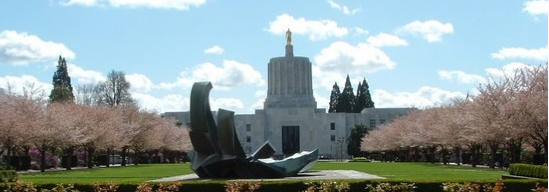
STRONG Salem is for everyone who wants to help and participate in getting Salem, Oregon, to quit chasing Growth Ponzi Scheme plans and instead become a resilient, fiscally responsible place that lives by the wisdom that "Communities exist for the health and enjoyment of those who live in them, not for the convenience of those who drive through them, fly over them, or exploit their real estate for profit."
Truly, where are the Darwin Awards for corporations? Should we call them Schumpeter Awards?
(Hat tip to Oregon Media Insiders blog.)

Your support means so much!Happens every year. Weather improves. Sun-starved Salemites seek sensuous, salubrious solar sensations. So they get outdoors. :^)
Thanks to you and your generous blood donations, our community will be able to help our victims of tragedy and ill health.
You are someone who cares enough about our community to give life-giving blood. Our neighbors depend on us for life... and we depend on you for continued loyalty. Your continued support is greatly appreciated by us as well as the many people you help with your donations. Have a good day!
Visit our website or call 1-800-GIVE LIFE (448-3543) for more information.
We look forward to hearing from you.
The American Red Cross
Pacific Northwest Blood Services Region
3131 N. Vancouver Avenue
Portland, OR 97227
(503) 284-1234
For restoring services and preparing for the future, property taxes are inadequate and unfair. Flat and regressive, they hit all residential property owners at the same rate, regardless of income. New fees or targeted sales taxes also won't suffice. One must get to the root and change the system. Options include replacing the residential property tax with a graduated income tax for those who live and work in the city.The idea of increasing our dependence on the income tax is really, really bad, no matter how well-intentioned. Salem is already the epicenter of destruction from Oregon's foolish over-reliance on income taxes now -- at the state level, just when the economic cycle turns down and we could use a stable source of funds to make counter-cyclical investments, our tax revenues plummet.
 Last year, Americans took more than 10 billion rides on public transportation, the highest level in more than 50 years. But despite the increases, public transit systems are being forced to cut back service, risking losing many of the riders they gained due to high gas prices and a bad economy. In New York, for example, the Metropolitan Transit Authority is moving forward with plans to drastically raise fares and totally eliminate some subway and bus lines. Our latest Transparency is a look at the 15 most popular public transit systems in America that have made or are planning to make cuts. You can see the full list of all cuts and potential cuts at Transportation for America.
With too many gardeners filling up the waiting list for community gardens, it's taking as long as 5 years to finally get a plot of dirt to grow veggies. So gardeners and city officials started a registry to connect homeowners willing to have their yards turned into gardens with the people who are willing to do the gardening. An excellent land-sharing solution, and in sync with the urban homesteading movement.

Jan 19, 2008: LOVESalem reaches the web, bringing a vitally needed message to Oregon's capital city: We must Oregon-ize to put the needs of people before the needs of cars. This requires that we live our environmental values -- that we LOVE (Live Our Values Environmentally) Salem -- by working to stop the Sprawl Machine.
The Sprawl Machine is a ravenous beast that feeds on green space, close-in neighborhoods, and property taxes and that excretes monstrous, ugly road projects that pollute the air, increase mortality and morbidity, promote climate change, weaken families and neighborhoods, and help weaken the social fabric and civic participation.
The Sprawl Machine works by constantly luring its prey with promises that the problems created by cars can be addressed by doing more of the same -- building more lanes, more bridges, consuming ever more money. In other words, the Sprawl Machine promises that we can keep doing the same thing over and over, while expecting a different result this time.
To subscribe and receive updates whenever new items are posted, go to the "Subscribe" link at the bottom of this page.


 Posts
Posts


