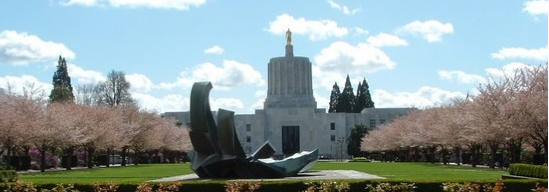
Fascinating reflection on underlying causes.
Showing posts with label Alternatives. Show all posts
Showing posts with label Alternatives. Show all posts
Tuesday, August 28, 2012


Tuesday, January 26, 2010
The Healing of America: The one health care book to read if you're reading only one
 Americans, learn from others?!? Are you mad? But seriously folks, great book.
 He's an engaging writer and, in a fairly short book, manages to provide both a great overview of the principal systems for financing health care and a down-to-earth level view of how the systems work in practice (a perspective gained by actually seeking and getting, or not getting as the case might be, care in each of the countries).
Saturday, January 2, 2010

Saturday, November 21, 2009
My Jobs Plan suggestion

And don't forget a national program to do millions of add-on insulated white metal roofs with water collection features.
1) Insulated -- most energy loss in a home/apt is out the roof; but adding insulation in the attic is labor intensive (not a minus in your project, but if your money all goes to labor, you get fewer roofs done -- better more roofs, more saving)
2) White -- see Secy. of Energy Chu's presentations
3) Metal with water collection features -- most American homes have toxic roof shingles where the rain washes a steady stream of the asphalt away; it is possible to collect and use the water, but to unknown result. Rather than tear these off (wasted labor, creation of landfill waste), leave them all on there, under a nice insulating blanket and metal roof that drains into an integral guttering/collection spout system that flows into barrels or cisterns.
Imagine all the energy saved (1) from the added insulation; (2) from the reduced air-conditioning load in summer; and (3) from reduced water pumping. And the nice increase in global albedo doesn't hurt either.
![Reblog this post [with Zemanta]](https://lh3.googleusercontent.com/blogger_img_proxy/AEn0k_vwCCJcrcr2UjHWvTHu3eQ7RBRq56hrtctge4V7DkxGWjd7NNsN27gXjS34X2vo83j8G2JtZF6ljYJugyPPmRx0fJAFU5LG_RgyfeM23JYWTtF1qqHPValY5TnLSUyvNWrvSGm7qWuErwf_bHibSS7B=s0-d)
Wednesday, October 14, 2009
Great idea from Michigan: Low-speed "green highways" for bikes, EVs

As we begin to head down the economic slope, our decline caused by peak oil, we will necessarily have to stop allowing heavy trucks and vehicles to destroy all our paved roadways (starting with the smaller ones and then ultimately kicking them off the interstates when those are converted to electric rail and power distribution rights-of-way). We simply cannot afford all the road maintenance, which is why Michigan is among the states that are depaving some roads entirely.
The first step to eventual electrification of all long-distance travel could very well be limiting trucks to interstates only, and using all the "blue" (second-tier) cross-country highways for human- and battery-powered travel modes.
If you travel with your eyes open, you will often note that there were hamlets or inns situated about a day's ride or walk through much of the country. We're probably heading back to that -- with inns and hostels situated about an easy day's biking apart (or a full-charge distance for a lightweight EV). Roads last a lot longer when you get the heavy trucks and SUVs off them.
![Reblog this post [with Zemanta]](https://lh3.googleusercontent.com/blogger_img_proxy/AEn0k_uE4mHUizBm22xGz7wH82_wwP8b2eD1xB2OdgeW_s3dRfnTrEm1zoHGgbw-Vqp9mSHQQ-AgNg-eLVNmgYmpQCu2nYrEyNIo_GjWBgx_MtYMZDF-AXXwDRJAuwrJ2d_iyzRefng-gCi8vQ3NFWKwIW0l=s0-d)
Monday, May 18, 2009
That's the spirit!
Someone at Salem-News.com has tossed out some ideas for a bottoms-up approach to dealing with Salem's funding shortfalls. He's asking you to send your ideas to him, but you're welcome to put them in the comments here too.
Tuesday, May 12, 2009
What is the Future of Education in a Post-oil America?
A friend involved in preparing for the transition to post-peak-oil America here in Cascadia has been mulling over the future of education, a field where he spent the end of the his second formal career (before starting his third as a farmer). He writes the following, which I pose as a query to those following LOVESalem. Feel free to chime in with a comment to respond to all of this or just a little piece of it.
The following quandary, described for education, applies to all public services --- and it is what our Whatcom County peak oil task force has discussed ad nauseum, with no sign of any conclusion on any aspect. You're all knowledgeable about peak oil and its likely consequences, so you're uniquely qualified to think beyond the peak.
All public education, by definition, gets funding from the entire tax base. We've seen already what happens in an economic downturn like the one we're in now - that tax base shrinks, and the tax collectors at all levels (except the feds, who just keep printing money and bailing out rich folks and fantasizing about "return to a growth economy") have to - by law - balance their budget and either
1. raise taxes, and/or
2. cut services.
In our state, nobody yet has the courage to go after more taxes - and schools at all levels are cutting budgets - including K-20 layoffs for the first time in anyone's memory.
Given that every burp in the price and/or availability of oil has always been followed by recession, and given that peak oil now means we now face decades of higher and higher oil prices and less and less availability, it's reasonable to think we'll have an ever-deepening recession, and an ever-declining tax base (or alternatively, taxes approaching 100%). At some point pretty soon, rising taxes will generate an awesome tax revolt, so we'd best start thinking about how to re-structure all education, from K-20, assuming there will be continually declining funding for it.
My guess is that the first thing deans & principals will advocate for is reduction in red-tape requirements, and all the 'non-essential' add-ons from the last few decades could disappear in a few years in order to avoid laying off faculty.
But I imagine something far worse than surgical fat trimming for a few years --- I envision cuts over the next few decades of a factor of, say, two to five. Not percent - but funding cuts by 2 to 5 times - coming on gradually over the next 20-30 years. If that seems a likely, or even a possible, outcome - then wised-up educators & ex-educators like yourselves could make yourselves super-useful by developing the outlines of a completely new strategic plan for that future, complete with a transition strategy. I do not see this as an "opportunity" for change - rather it's an exercise to engage in out of desperation in the post-peak world we're likely to enter tomorrow --- with a world short of all essential resources and in a state of major population overshoot. Some questions to start with:1. What things about the system need fixing, regardless of peak oil? You've all mentioned several of those things already.Several years ago I asked author and educator Richard Heinberg whether he'd thought about this for higher ed, and he gave a massive shrug of his virtual shoulders and said he'd thought of it but it was too big for him.
2. What will a desperate population REALLY need to know for maximum survival and well-being (or, if you're a pessimist, for minimal die-off)?
3. How can we re-organize K-20 education to provide that knowledge and/or experience?
4. What are the physical constraints (i.e., our super-silly suburban living arrangements, with severe restrictions on getting around - and don't tell me mass transit, which also depends on the tax base & fuel)?
5. What are some other big questions to consider?
Collectively, educators need to begin addressing this issue, just as the medical profession is belatedly starting to do.
Monday, May 11, 2009
Tuesday, April 28, 2009
Eldertown -- the city as a place for humans
As hellish as life was in the primitive factory towns (see Steven Johnson's fine study of early industrial London, The Ghost Map), cities at last have matured into the most ecologically enlightened habitat for a world that numbers billions of human beings. Urban density compacts population and saves the land, its resources, natural beauties, and human lives. Cities are where ideas are exchanged most rapidly and where medical progress is made. Subtract the cars and freeways, condense the suburbs back into urban centers — some large, some small — mix in a good measure of social justice, and we have the best design for living in a world where over 50 percent of the human race now chooses to reside in cities. Eldertown makes all this more possible.
Sunday, April 26, 2009
Rebuild freight rail: we need projects that are shovel worthy, not just shovel ready
The always-excellent "Reality Based Community" has a good pointer to an even better piece.
Monday, April 20, 2009
"Sprawling from Grace, Driven to Madness" -- free viewing from 1,000 Friends

A New Documentary: Sprawling From Grace
In honor of Earth Day, in partnership with Cinema Libre Studio and Grapeflix, we would like to offer you the opportunity to view David M. Edwards' powerful new documentary, Sprawling From Grace: The Consequences of Suburbanization, online for free!
The film features Bill Clinton, former governor Michael Dukakis and many other leaders on the issues of suburban sprawl and the need for better public transportation, centralized planning and renewable energy.
For a preview, visit www.sprawlingfromgrace.com
Or check it out on Facebook.
So check it out -it's free- and once you've viewed the film, we ask that you consider making a secure donation for at least the same amount it might cost you to see the film in a movie theatre! The filmmaker and distribution company are allowing all donations to come directly to us so we can continue our important work.
The free online access starts Monday, April 20 beginning at 8:00am ET through Wednesday, April 22 at 11:59 PT and can be viewed at any time during that period.
So start watching it now – it's easy!
Go to http://www.grapeflix.com/Category/frmCategoryDisplay.aspx?CategoryID=3591
Click on the green "Play Online" button
Register for Grapeflix VOD (video on demand)
Test your system to make sure you meet the minimum requirements to view the film online. (After the test is complete, click 'Continue' to watch the film. If you get taken back to the Grapeflix homepage, just click on the link in step #1 of these instructions and then click "Play Online".)
A window will pop-up with the embedded video player
The film is viewable in full screen by clicking the full screen button on the video player or by double-clicking the video player in Firefox. To ensure you will not have difficulties viewing the film please –
Disable all pop-up blockers. (Enable Active X)
Use Internet Explorer
Upgrade Windows Media Player to version 11
Confirm that you have a stable high speed internet connection.
Allow time for the film to buffer after the video player pops up.
*Please note: the Grapeflix system work best with a Windows operating system and Windows Media Player 11.
Further help with Grapeflix can be found here: http://www.grapeflix.com/Index/frmPlayerHelp.aspx?QID=49#answers
Contact Grapeflix here: http://www.grapeflix.com/Index/frmContactUs.aspx
If you enjoyed the film, click on the orange button on the Grapeflix page to tell your friends about it.
The film will be available on DVD this week at Cinema Libre Store, online at Grapeflix and through other major retailers.
We hope you enjoy it and find it as enlightening and inspiring as we do. Again, please consider making a tax-deductible donation to our organization by clicking here.
Enjoy!
The Team at 1000 Friends of Oregon
Wednesday, April 15, 2009
Brave man seeks to strike at the root of a problem
Former Salem City Councilor Bill Smaldone has an interesting op-ed in the SJ today. Reminds me of the old Thoreau saying: "There are a thousand hacking at the branches of evil to one who is striking at the root."
I appreciate his willingness to tackle the issue, but differ greatly here:
Moreover, the problem with income taxes is that they discourage exactly what we spend a lot of money and energy trying to encourage. Relying on income taxes is like driving a car with your foot jammed on the accelerator and brakes at the same time. You wind up working against yourself and damaging the vehicle at the same time.
Much better is the afterthought idea he tosses in: "Or one could consider other choices such as taxing underutilized land." Now, that is a good idea. Undeveloped land in the urban growth area should be taxed as if it were developed at the highest economic use value. Instead of rewarding speculators who hold land off the market with low taxes, we should tax the land as if they made the maximum investment that the zoning allows, so that they will either develop the land or sell it to someone who will. This has the effect of bringing a lot of idle land onto the market (reducing prices), promoting investment while reducing sprawl. Best of all, it puts the taxes in alignment with the economic development policies we're trying to promote, instead of making them work in opposition to each other.
I appreciate his willingness to tackle the issue, but differ greatly here:
For restoring services and preparing for the future, property taxes are inadequate and unfair. Flat and regressive, they hit all residential property owners at the same rate, regardless of income. New fees or targeted sales taxes also won't suffice. One must get to the root and change the system. Options include replacing the residential property tax with a graduated income tax for those who live and work in the city.The idea of increasing our dependence on the income tax is really, really bad, no matter how well-intentioned. Salem is already the epicenter of destruction from Oregon's foolish over-reliance on income taxes now -- at the state level, just when the economic cycle turns down and we could use a stable source of funds to make counter-cyclical investments, our tax revenues plummet.
Moreover, the problem with income taxes is that they discourage exactly what we spend a lot of money and energy trying to encourage. Relying on income taxes is like driving a car with your foot jammed on the accelerator and brakes at the same time. You wind up working against yourself and damaging the vehicle at the same time.
Much better is the afterthought idea he tosses in: "Or one could consider other choices such as taxing underutilized land." Now, that is a good idea. Undeveloped land in the urban growth area should be taxed as if it were developed at the highest economic use value. Instead of rewarding speculators who hold land off the market with low taxes, we should tax the land as if they made the maximum investment that the zoning allows, so that they will either develop the land or sell it to someone who will. This has the effect of bringing a lot of idle land onto the market (reducing prices), promoting investment while reducing sprawl. Best of all, it puts the taxes in alignment with the economic development policies we're trying to promote, instead of making them work in opposition to each other.
Friday, March 27, 2009
Next Tuesday: Opportunity to help protect critical farmland
Please attend an important hearing next Tuesday March 31st in Salem on House Bill 3099. The hearing has been called to receive public testimony on this bill which would increase protection for farmland.
Date: March 31, 2009
Time: 3:00 PM
Location: State Capitol, Hearing Room E
Contact: Cheyenne Ross, Committee Administrator: 503-986-1734
Details: Please arrive early and sign up to testify.
The original purpose of the Exclusive Farm Use Zone is to protect Oregon's agricultural industry from conflicting uses and poorly planned development. Currently there are over 51 different non-farm uses allowed in the farm zone, ranging from private schools and private playgrounds, to gravel mines and golf courses. It is time stand up to protect our farmland!
Please join us next Tuesday to express your concerns directly to the legislators that will be making key decisions on farmland protection. Legislators need to hear your personal stories about why we need to pass HB 3099.
Please let the Land Use Committee know that you support HB 3099 because:
Farmland is not undeveloped land waiting for one of these conflicting uses. It is already developed land that supports one Oregon's leading industries. The agricultural industry is a primary driver of the Oregon economy and it keeps growing every year.
Most of these conflicting uses have nothing to do with farming. It's time to simplify our land use laws so that exclusive farm use zones are exclusively for farming.
Among other needed changes, HB 3099 would:
- Better protect our best soils from gravel mining, by requiring an analysis of alternatives
- Bar golf courses from high-value farmland
- Allow new schools on farmland only if they primarily serve the rural community, instead of kids bused in from nearby cities
The whole bill can be read at: http://www.leg.state.or.us/09reg/measures/hb3000.dir/hb3099.intro.html
- Help ensure that temporary medical hardship dwellings don't turn into permanent dwellings
Please let us know if you'll be able to join us to testify by contacting Tara Sulzen at 503-497-1000 or emailing her at tara@friends.org.
Thank you for all you do!
Tuesday, March 24, 2009
Salem needs to LEARN -- and fast

L E A R N
A one-page acronym to define five actions necessary to avoid societal collapse because of the imminent decline of finite fossil fuels:
LOCALIZE agriculture, energy production, social services, essential manufacturing, etc. All will have to regress to a limited “twenty-mile radius” community. This will not be a choice. The inevitable curtailment of transportation fuel will reduce future travel. Intercity light rail will be impossible without energy. www.postcarbon.org.Source: www.solarcarandtractor.com
EDUCATE yourself and others. We passed peak oil in late 2008. Natural gas, coal, and fissionable uranium are not far behind. Without ever-increasing energy, real growth, including a debt-based financial system based on future principal plus interest, cannot continue. Recognize the fallacies of bogus solutions like: “There’s plenty left”; “The scientists will save us”; “We can efficiency our way out of our dilemma (not if we don’t reduce consumption)”; “Biofuels, including waste, cellulosic ethanol, and grease will suffice” (at the expense of food). The honest facts must reach the public, the media, and decision-makers even in the midst of denial. Start with www.peakoil.net, www.theoildrum.com, www.321energy.com, etc.
ADAPT to a very limited solar-electric future as our only hope of perpetuating any semblance of the brief fossil-fuel age. This vision could be sustainable, clean, and far superior to our ancestor’s harsh existence. A solar-electric sequel could integrate with waning fossil fuels and all other energy sources such as limited hydro or geothermal into a modern electrically-based system and allow individuals to take control of their own production with PV. Also included are wind and concentrated solar.
RATION all fossil fuels starting immediately with gasoline. This is the only way we can reduce consumption on a controlled basis without increasing price-competition and conflict over the remains. Rationing is probably our best chance to buy time for mitigation and give our kids a chance for the remnants of the party.
NEGATIVE population growth. This is the toughest and most critical issue. With peak oil we have passed peak growth. Our short cornucopia of excess resources (including fossil fuels and all natural resources) has ended. We have far too many people in the US and the world for a sustainable civilization. If we don’t get the correct facts out and convince people to begin negative population growth, mother nature will reduce population in her own cruel ways. See www.npg.org, www.optimumpopulation.org, www.worldpopulationbalance.org and others.
We all need to understand and project this acronym.
I bought and distributed several hundred copies of John Howe's excellent short book, The End of Fossil Energy and the Last Chance for Survival, so I'm already predisposed to like him. He has a gift for cutting through the extraneous and getting to the few crucial items at the root of things. His LEARN acronym is a great advance, offering us the chance to say, in a page, exactly what we must do as a society.
Monday, March 16, 2009
Even bankrupting ourselves on roads doesn't solve congestion

Hugely important insight from the Sightline Institute: congestion is much more related to the population of the urban area than it is to how much you spend pouring roads. In other words, spending money to attract businesses and people to your city is what causes congestion -- and no amount of roadbuilding is going to change that.
Perhaps, instead of bankrupting ourselves trying to chase the treadmill of roadbuilding and demands for more and wider roads, we should start focusing more --- lots more --- on giving people alternatives to driving in the congested conditions that are going to be there no matter what we do. The whole article at the Sightline site is well worth reading.
Wednesday, March 11, 2009
Should this idea fly? Or at least go to the airport?

Then I thought about the huge footprint of the Salem (McNary) Airport, much of which is essentially idle land right now.
Is there anyone interested in making a run at the airport folks about establishing community gardens and maybe even some small animal husbandry at the airport? It seems like (pending soil testing to ensure pollutants are not an issue) that it would be a great location -- close enough central location so that plenty of people could bike/walk/bus or drive to it, plenty of room for garden sheds/tool storage, lots of sun, etc. No problems with noise, obviously; few close-by neighbors; and a nice way to make productive use of currently not-too-well-used land.
With land being the critical issue for would-be farmers and small growers, what about making better use of land we already have?
![Reblog this post [with Zemanta]](https://lh3.googleusercontent.com/blogger_img_proxy/AEn0k_srnDnEYDMXmI19Ipzpoe-urFPhkM7HZ8owDNIT4GS4olFJU1HNnhv71G1J4RjwOgudOut5px3Z7GNRPhqSmt5hfGyC4jK9i5Wcdx2t4UN7TlYiUg4Pbx56ybp4oq8hRefXMHeb4uRGuz94r3VR8QCs=s0-d)

Tuesday, March 10, 2009
Food & Sustainability Book Group forming
LOVESalem visitors can look into joining a "potluck and books" group being organized by a local sustainability advocate, Melissa A, who is a real asset to our little city.
The first meeting will take up the very well-reviewed and popular book by Barbara Kingsolver, a gifted writer, called Animal, Vegetable, Miracle.
The first meeting will take up the very well-reviewed and popular book by Barbara Kingsolver, a gifted writer, called Animal, Vegetable, Miracle.
Well ladies and gentlemen, I've composed a survey page on SurveyMonkey.com to gather your responses as to when we should hold our first monthly book discussion & potluck. The book we will discuss is: Animal, Vegetable, Miracle by Barbara Kingsolver.
You are getting this invitation because you've recently participated in a discussion group (i.e. Menu for the Future), wish you had participated, participated in one in the past, or are perhaps a food-conscious person who wants to socialize and join this group :)
Here's the link you need to access in order to cast your input:
http://www.surveymonkey.com/s.aspx?sm=AqDCWJY9DUUX6J0GP9Hbow_3d_3d
Cheers,
Melissa
FYI - You can forward this to your friends who might be interested in attending, the survey is not restricted to just the e-mail address I'm sending this to. AKA, spread the word!If you want to participate, complete the survey (link above) and you can contact Melissa at community.dreamer@yahoo.com
Thursday, February 26, 2009
More like this, please: grow food on idle industrial zoned land
In the story about the latest setback for plans to develop the Mill Creek Site, some commenters at the SJ site hit on the right idea:
(first commenter): Plant food crops there this spring to help people out until this prime property is ready to be developed. There is water available on this property. Canneries are close by. Help out the area food banks. Why let this good farm land just sit when there are hungry people in this area and things will not get better for a while.
(responding): Excellent idea! Why not let those who want space to grow food but don't have room now have a small plot according to family size? They could pay a fee to cover water if needed. Maybe the community college or county extension or someone could offer classes on canning and freezing produce. Let's put that land to good use
For the young to save us, we must first save the young
It's no accident that most of the social dysfunction that imperils us skyrocketed in the last third of the 20th Century, since that is precisely coincident with the period in which television attained dominance as the primary social/recreational activity in the United States. Rather than bringing up children who slowly grew in competence and experience with age, we have kept kids trapped in a permanent adolescence even as their bodies race into adulthood, watching others have lives rather than learning to build one for themselves.
Of all the silver linings to be hoped for from the economic hardship period we are entering, the collapse of 24-hour television and television-as-babysitter is the one most devoutly to be sought. When the cable company reports that subscriptions are plummeting as people realize that they are hurting their kids with TV, that will be cause for hope.
Of all the silver linings to be hoped for from the economic hardship period we are entering, the collapse of 24-hour television and television-as-babysitter is the one most devoutly to be sought. When the cable company reports that subscriptions are plummeting as people realize that they are hurting their kids with TV, that will be cause for hope.
Watching a lot of TV during adolescence, an alarming new study has found, can change a normal brain to a depressive one. The study, which tracked more than 4,000 adolescents as they grew up, found that for every extra hour a teen spends watching TV or playing videogames on an average day, he or she is 8 percent more likely to develop depression as an adult. Study author Dr. Brian Primack says that teens’ experiences help shape their developing brains, and that being parked in front of a screen often replaces positive social, academic, and athletic activities that give kids a sense of mastery and self-respect. Instead, he tells the Los Angeles Times, TV teaches kids to be passive, and to judge themselves against fictional characters whose looks and accomplishments seem out of reach.
Subscribe to:
Posts (Atom)

 Posts
Posts


