
Water in Oregon: Not a Drop to Waste

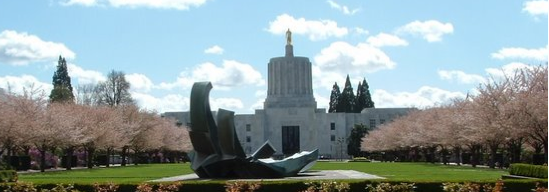
STRONG Salem is for everyone who wants to help and participate in getting Salem, Oregon, to quit chasing Growth Ponzi Scheme plans and instead become a resilient, fiscally responsible place that lives by the wisdom that "Communities exist for the health and enjoyment of those who live in them, not for the convenience of those who drive through them, fly over them, or exploit their real estate for profit."


We received your RSVP to the Hamblin Nursery tour! The tour will be on Sunday, April 25, at 1 p.m.If you want to get in on nice things like this, go over to the Friends of the Salem Saturday Market website and join in -- help bolster one of Salem's nicest attractions.
Thanks for your RSVP to the Fairvew Farm Dairy tour! The tour is scheduled for Sunday, May 16, at 10 a.m.


When we somehow have a hand in its creation, and locate food production within our cities and suburbs, food can bind us together. . . . Signs of the ongoing re-localization are easily found in such things as the increasing popularity of farmers markets, and the locavore movement. But even these signs, although positive, prove the need for further effort; most who sell at farmers markets drive miles to get there. And while real communal bonds form between food producers and their customers at the local market, at the end of the day, farmers return to their own community rather than being a part of the one where they sold their goods. The locavore movement has therefore moved the locus of food production closer for many, but not made it truly local, not put it at the center of where we live. Nor have food movements currently underway spurred true participation in the production process--like, for example, the raising of chickens in the backyard.
With civic agriculture, growing fruits and vegetables within communities, and keeping chickens, can come to be seen as something vital--a way to build bonds between neighbors, like my own mother would in walking around her neighborhood, handing out the overflow of her tomato-production, and freshly baked loaves of zucchini bread and carrot cake. The one story told at her memorial service that I will never forget is a joyful reminiscence, shared by a former neighbor, telling of how my mother taught them how to grow bountiful crops of tomatoes, how to prune for maximum fruit production, and what other vegetables grew well in the micro-climate of their neighborhood. He also recalled, again with great joy, all the cookies and cakes that my mother would bake and share with anyone who wanted one or two or three or more. "She fed the whole neighborhood, and loved doing it," he said.
I thought about my mother reading a recent essay in the New York Times magazine that discussed the growing phenomena of stay-at-home mothers taking up gardening, tomato-canning, and the raising of backyard chickens. The title of the essay is The Femivore's Dilemma, and I definitely recommend the essay in its entirety.[13] . . .There is even an economic argument for choosing a literal nest egg over a figurative one. Conventional feminist wisdom held that two incomes were necessary to provide a family's basic needs--not to mention to guard against job loss, catastrophic illness, divorce or the death of a spouse. Femivores suggest that knowing how to feed and clothe yourself regardless of circumstance, to turn paucity into plenty, is an equal--possibly greater--safety net. After all, who is better equipped to weather this economy, the high-earning woman who loses her job or the frugal homemaker who can count her chickens?I am not sure that my mother (or I) would agree with the idea that a woman growing her own vegetables is a source of "legitimacy"--as if not doing so would make one illegitimate, at least in the eyes of some. But there is no question that there is value in growing your own vegetables, a value that extends beyond the gardener, and the family, to the greater community. There is also a value in recognizing that it was not that long ago that families had no choice but to raise their own vegetables, and keep chickens for eggs and meat, and raise other livestock too. As Lyson helpfully reminds us about our country:Less than 100 years ago most rural households in the United States sustained themselves by farming. While some agricultural products were sold for money on the open market, others were produced solely for household consumption or for bartering with neighbors.[14]Thus, it was not for gaining a sense of legitimacy or personal fulfillment that households produced their own food; it was so as to not starve to death; it was to survive. Still, even in battling starvation, food was not "mere sustenance"--which is what the food is that lines the shelves of supermarkets, and the fast food we purchase at the drive-thru and gulp down on our way to whatever our next destination happens to be.
When people raise and make food to eat, and barter it in exchange for that which others made, true community ends up being built. To barter means also to share, and to interact with neighbors in a way that generates meaning and trust. You do not cheat someone with whom you will need to barter again. Such barter-exchange cannot be treated as a zero-sum game, it is something that requires that all participants benefit, and that no one lose. This is the sometimes overlooked moral of William Faulkner's Snopes novels and short stories, which chart the rise and fall of the Snopes family, a rise and fall both caused by cheating their neighbors. Such cheating variously harmed and helped many; however, its ultimate consequence was the destruction of a community, Frenchman's Bend. Where the exchange of goods does not engender trust, where you are as apt to be cheated by your neighbor as helped, there can be no bonds of loyalty, and thus no sense of community at all.
Well into the modern era, communities and villages throughout Europe were centered around not only local agriculture, but such things as community hearths where once a week or so local residents would bring bread to bake. One of the most memorable scenes in Jacques Pepin's excellent autobiography, The Apprentice: My Life in the Kitchen, was one that involved him being "loaned" by his mother during the summer to a farmer and his family to assist the area's communal efforts to keep everyone fed during World War II. Here is how he describes it:Like every other household in Montvernier, the Merciers lacked an oven large enough to bake the dough Mme. Mercier had laboriously prepared. Instead, the people of the town share a massive common baking oven with the residents of a nearby village called Montbrunal. Bread-baking day had all the excitement of a carnival. Villagers greeted each other loudly and gossiped in small clusters. Kids ran about and played....
The oven seemed as large as a house, and...I watched the baker-farmer feed it with the pile of wood needed to bring it to the proper temperature. The smell of so much baking bread was enthralling. We stood there for hours. One after the other, farmers arrived with their loaves, two dozen or so each, and the baker would take over. At the end of the day, some farmers brought casserole dishes, containing anything from beans to cabbage, to be cooked overnight in the heat retained by the oven.
* * * *
Montvernier offered plenty of experiences for a young city boy...But for me the most impressive thing...was that wood-fired bread oven and the way it not only nourished but also brought together the people of two remote mountain communities.[15]

 Subtitle: "Why we must act now to end climate change and create a sustainable future"


BOSTON GLOBE - The news says we are watching the death of public education before our eyes. Detroit is closing more than 40 schools, Kansas City wants to close more than 40 percent of its school buildings. Other cities have been closing schools over the last decade. Boston avoided closings in its most recent budget deliberations, but still must slash custodial staff and postpone building repairs.
OUR DYING PUBLIC SCHOOL SYSTEM
It is no secret that American education is at a great divide, unrivaled in most of the developed world. The United States spends $9,800 per public primary and secondary education student, which is technically high by global standards.
But meanwhile, children of the wealthy are being trained at private schools at more than triple the expenditures. In the Boston area, day school tuition rates are closing in on $35,000.
Our investment in public school teachers is paltry for the wealthiest country in the world. According to the National Center for Education Statistics, the United States ranks in some measures behind England, Italy, Japan, Scotland and way behind Germany in starting teacher pay. The average expenditure on college students in the United States amounts to $24,400 per college student, two and a half times more than the $9,800 per-pupil spending in the public schools.
Beneath the numbers is the resegregation of children on the basis of class, race and immigration status. Prison spending soared so much, that by 2007, five states spent as much or more on corrections than on higher education, according to the Pew Center on the States.
In monetary terms, we have given up on millions of children. 'I don't think necessarily that public education is dead, but certain parts of it are dying," said Linda Darling-Hammond, a Stanford University professor who headed President Barack Obama's education transition team. 'The programs of the 1960s and 1970s that helped make education more equitable were mostly eliminated in the 1980s and never put back.
'We're disinvesting in a significant way. With the huge decline in America of manual labor jobs that are being off- shored or digitalized, the vast majority of jobs are knowledge based. If we do not invest that way, we really can't survive as a nation. To deeply underfund public education as we are doing does not make any sense."
Author of the 2009 book, 'The Flat World and Education," Darling-Hammond says neither poverty, nor the diverse nature of the American population are excuses not to educate everyone. Several countries were behind the United States decades ago in education and now have passed us.
She cites the example of Korea, which 'in the space of one generation . . . moved from a nation that educated less than a quarter of its citizens through high school to one that now ranks third in college-educated adults."
She noted how Singapore, where 80 percent of families live in public housing, was tops in the world in fourth-grade and eighth-grade math assessments in 2003. 'When children leave the tiny, spare apartments they occupy in high-rises throughout the city," she wrote of Singapore, 'they arrive at colorful, airy school buildings where student artwork, papers, projects, and awards are displayed throughout, libraries and classrooms are well-stocked, instructional technology is plentiful, and teachers are well trained."CHILD ABUSE: RACE TO THE TOP
Delaware was one of the winners in Arne Duncan's so-called 'race to the top' contest, which is to say, his bizarre idea of what a school system should look like. Here are a few excerpts from the Delaware submission uncovered by Susan O'Hanian. If you are a parent in Delaware you might want to move, unless you want your child talking like this instead of using conventional English:
With the implementation of a new testing system, Delaware's teachers will have a wealth of data and information available to them. This data is only useful, however, if teachers can translate the information into classroom solutions and use it to inform their teaching. To make sure that each teacher has those skills, Delaware will deploy data coaches to all [local education authorities]. The State will provide 4.5 hours of data coaching per month to each professional learning community (of 6-7 teachers) for two years. The coaches will be contractual in nature and work on a full time basis. 15 data coaches will be provided to the first waive of schools beginning in January 2011. At the peak of the program, 35 data coaches will cover all schools in 2011-12. In sum, each school will have access to a data coach for two years with State support. These data coaches will be fully funded for non high-need schools at a rate of $104,000 per data coach annually ($54 hourly rate). Because of the importance of this initiative, high-need schools will be required to contribute 50% of the cost for data coaches. This will help ensure that these schools have a high level of engagement and investment in the successful use of the data coaches and the influx of funds that high-need schools will receive through the Title I allocation formula will ensure that they have sufficient resources to contribute to this initiative.
For all LEAs/charters, the State will. . . Create the technological base for instructional improvement systems1 (e.g., reports based on formative assessments) and integrate into the Educational Dashboard Portal--Appendix A-7
For all LEAs/charters, the State will. . . Review and adopt CCSSO standards by August 2010, as appropriate, and align grade-level expectations to guide curriculum
For all LEAs/charters, the State will. . .
- Build an Educational Dashboard Portal that Makes State longitudinal data easily accessible to stakeholders
- Provides differentiated "dashboards" based on stakeholder role, with data of interest to the stakeholder (as determined by research), full longitudinal and trend information, and correlations between key statistics
Build the capacity to use data to inform instruction by implementing instructional improvement systems and providing support from data coaches The state will. . .
- Create the technological base for instructional improvement systems (e.g., reports based on formative assessments) and integrate into the Educational Dashboard Portal
- Define criteria and quality standards for instructional improvement systems
- Pre-approve methods and/or providers of instructional improvement systems meeting these expectations
Data coaches will facilitate collaborative planning time to help teachers and leaders develop the technical skills to analyze data and the pedagogical skills to adjust instruction based on data
For all LEAs/charters, the State will. . . revise DPASII to meet regulations requiring student growth for effective and highly effective ratings. . . define rigorous and comparable measures of student growth in consultation with stakeholder groups
The State will. . .provide high-quality training to assessors on conducting evaluations and providing specific and actionable feedback using the State's 4- level rubric. . . define the teacher leader role and responsibilities (which will include daily teaching time) and create an evaluation supplement for DPAS II for teacher leaders. . . propose legislation requiring teachers to show appropriate levels of student growth prior to offering continuing licenses and tenure protections
Improve the coherence, quality, and impact of support for teachers and leaders through more rigorous certification and prioritization of instructional leadership
Identify schools to turn around through the State Partnership Zone, give the State authority to intervene in reform plan following collective bargaining, and provide support with a strong turnaround office.


Fiscal Fantasies
. . . The basic picture of the federal government you should have in mind is that it’s essentially a huge insurance company with an army; Social Security, Medicare, Medicaid — all of which spend the great bulk of their funds on making payments, not on administration — plus defense are the big items. Salaries aren’t.But the Kudlow picture is nonetheless a key part of conservative imagery; the idea of vast rooms full of government employees doing nothing productive is central to their vision of painless spending cuts. The fact that it’s not remotely true is irrelevant; they want it to be true, and that’s enough.


 Posts
All Comments
 Posts
All Comments


