Sunday, July 26, 2009

Monday night, 7/27, 6:30 p.m.: The future of Minto Brown Park

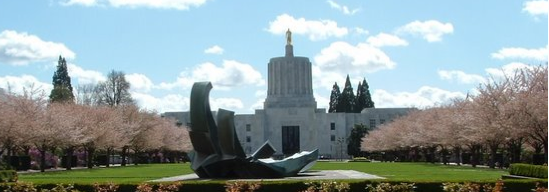
Minto Brown Park Salem OregonImage by OregonDOT via Flickr

The future of Minto Brown Island as a public park is on the table at a public hearing at City Hall at 6:30 p.m. on Monday, July 27.

The paper calls this a proposal for "federal park funds" but, in truth, the proposal is all about spending "stimulus" money as fast as possible, which is why the Natural Resources Conservation Service (NRCS) in the US Dept. of Agriculture rejected the small plot at Battle Creek and instead asked the City to offer some much bigger chunks of land. (The fact that Battle Creek is privately owned is not controlling; the grants are from a fund that is used to get easements on private lands all the time -- in fact, the standard easement sale contract that NRCS gave the city presumes it's a private landowner ... the city is the odd duck for trying to give control of city park land to the feds.)

In other words, the federal folks are simply looking to get deals signed as fast as possible in order to be able to report that they've "created jobs" as part of the federal activity around the "stimulus" package. Essentially they grabbed a floodplain easement program intended for use along the banks of the big rivers (Missouri, Mississippi, etc.) to reduce federal flood damage payments and are trying to use it to shovel money out.

SOP so far -- except that the (a) there are never any damage claims for flooding on Minto;

(b) the flooding benefits Minto by refreshing and remineralizing the soil;

(c) the feds are terrible landlords and partners because their funding is so inconsistent (see Mt. St. Helens, where the same US Dept. of Ag has closed one of two observation stations). Partnering with the feds is like subleasing your apartment to the football team -- they do whatever they want and don't necessarily listen real well.

(d) the feds would only pay for upkeep of the "conserved" land for three years -- after that, all costs to maintain this land (maintenance we now get for free from a farmer who tends the land) will fall to us -- and you can see how strapped Salem is for funds.

(e) the easements would prohibit even fully organic farming or community gardens -- including on some of the best, highest, driest ground in the whole park! Some use of "emergency flood relief" funds.

Read why the Salem Parks and Recreation Advisory Board unanimously resolved that the City should reject the staff proposal and learn what the SPRAB thinks the city should do instead. Links to prior posts on this topic there as well.

Please come and speak up for your park. Tell the City Council to adopt the recommendations of the SPRAB:

* reject the staff proposal to take 200 acres out of productive local agricultural use
* put the farming on the island out for competitive bidding
* revise the park master plan.

We can't afford to trade control of our unique urban park with its long history of agricultural use for a quick hit of borrowed federal dollars.
Reblog this post [with Zemanta]

Saturday, July 25, 2009

The best possible outcome of the Gates fiasco

Several mobile phonesWe shouldn't have to depend on the luck of having a kid with a cellphone around to catch police misconduct (or to document that there was no misconduct); it's time for all law enforcement to be monitored with "cop cams" that capture all their interactions with citizens. Image via Wikipedia

One simple suggestion, a generalization of the requirement that all police interrogations be videotaped that State Sen. Barack Obama managed to write into the Illinois statute books: build a cell-phone-type movie camera with sound into police headgear, and require that it be turned on at the beginning of every interaction with a civilian. Sunlight is the best disinfectant. And in the cases where it's the civilian who acts aggressively, the videotape will help defend the cop against a false accusation of misconduct.
I've been making this same argument for years: we should no longer accept the idea that we can't supervise police conduct in the field -- after all, the police have long since decided to turn America into the surveillance state where the conduct of perfectly innocent people is scrutinized in detail with hundreds of thousands of recording devices and cameras, to say nothing of telephonic/internet spying.

Now is the time to say that the conduct of all law enforcement agents -- anyone having the power to detain and arrest -- must be monitored when they interact with the rest of us, so that we the people can determine for ourselves whether our agents, who obtain their power from us, are using it properly.

As police and prosecutors so often say to us, you won't mind if you have nothing to hide.

Salem should implement this quickly. After all, in these tight budget times, we can't afford to have to pay big-money police abuse settlements.
Reblog this post [with Zemanta]

Maybe the best quick read ever on the industrial phood nightmare

CAFO Near La Gloria, Mexico - DetailA phactory pharm -- funny, it doesn't look like the image on the packages. They NEVER show the gigantic manure lagoons. Image by SkyTruth via Flickr

A sample:

It is in the 1970s that Smithfield Foods revolutionizes hog production. "What we did in the pork industry is what Perdue and Tyson did in the poultry business," Joseph W. Luter III, chairman and chief executive of Smithfield, told the New York Times in 2000.

According to a Rolling Stone exposé, Smithfield "controls every stage of production, from the moment a hog is born until the day it passes through the slaughterhouse. [It] imposed a new kind of contract on farmers: The company would own the living hogs; the contractors would raise the pigs and be responsible for managing the hog shit and disposing of dead hogs. The system made it impossible for small hog farmers to survive -- those who could not handle thousands and thousands of pigs were driven out of business."

In the 1950s, there were 2.1 million hog farmers, with an average of 31 hogs each. As of 2007, there were 79,000 hog farmers left, averaging over 1,000 hogs each. A single Smithfield subsidiary in Utah holds a half-million hogs and produces more shit every day than all the residents of Manhattan.

Rolling Stone's stunning report describes the lakes of shit that surround pig factories as the color of Pepto Bismol because of the "interactions between the bacteria and blood and afterbirths and stillborn piglets and urine and excrement and chemicals and drugs."

Vegetarians who think they are unaffected by this toxic fecal frappe should think again: The sludge is often used to "fertilize" crops that end up on your table.

Beef, poultry and hog CAFOs could not exist without large-scale environmental devastation. Governments at every level exempt these operations from the laws and regulations covering air pollution, water pollution and solid-waste disposal. They are also largely free from proper bio-surveillance, that is, public monitoring to detect, observe and report on the outbreak of diseases.

Mike Davis, author of The Monster at Our Door, writes that scrutiny of the interface between human and animal diseases is "primitive, often nonexistent" because Smithfield, IBP and Tyson would have to spend money on surveillance and upgrade conditions at their hellish animal factories.

Read it all here. Then start growing some food, even just a single tomato or zucchini -- and help get hens legalized here in Salem.
Reblog this post [with Zemanta]

Great idea: Farming in boulevards!

I have seen photos of similar things in N. Europe, particularly in the Low Countries where land is very dear. Also I have seen similar things in Japan -- lush crops growing in small spaces in very urbanized areas.

Friday, July 24, 2009

Yet another recall showing why we need to encourage MORE local food production

A plum treePlum tree laden with fruit. With some creative thinking, Salem could create a vast supply of healthy & inexpensive food for the Food Bank and for the Saturday Market just by putting fruit trees in parking strips and starting an "adopt-a-tree" program to ensure the fruit is tended and harvested. Image via Wikipedia

Another industrial phood nightmare, another reminder that what people in Salem need is more encouragement and support for growing or buying locally grown food that has never joined the industrial phood system.

That means encouraging backyard and frontyard gardening, replacing street trees with fruit trees, community gardens, support for small market gardeners just starting out, and, yes, allowing residents to keep some hens.

Don't know how to get started? Call Your Home Harvests.

UPDATE: Great article on how the industrial phood system has mastered the arts of using our evolved tastes against us.
Reblog this post [with Zemanta]

Federal money City of Salem staff should pursue

"I saw the dollar signs, man" at San...Image by Trig's via Flickr

One of the most frustrating things about the whole misguided effort to permanently (as in forever) lock up rare and productive agricultural acreage within the Salem urban growth boundary on Minto-Brown Island is that it was totally random, spur-of-the-moment lunge in an entirely new direction for the park, prompted only by the promise of some fast cash (borrowed money).

Salem originally went to the feds seeking money for an easement at Battle Creek, not Minto. It was the feds in Portland -- people with no knowledge of Salem or concern for its needs -- who came back with "No, but what about Minto?" (The feds want the biggest chunks of acreage because that's easier for them to administer.)

City staff, instead of consulting the Master Plan for Minto and saying "Well, gee, there's nothing in here about wanting to reduce agriculture in the park, I don't think we're interested," entered into discussions with the feds about just how much acreage to turn over to federal control. No notice to the public about this huge change in direction for the park, no discussion with the city council (the thing was hidden in the Council's consent agenda until a citizen happened to inquire about farming on the island and learned that there was this proposal being fast-tracked to chase these "stimulus" dollars).

Meanwhile, there's a river of federal stimulus dollars flowing into Portland for energy conservation work, work that Salem desperately needs. Getting a lot more of this kind of stimulus money is what city staff should be focused on--improving the energy efficiency of all structures in the city, because money sent out of town for energy leaves forever. Whereas money spent on weatherization and solarizing buildings not only creates jobs here but permanently improves our economy. Salem's small energy efficiency award ($1.5M) is just a drop in the bucket of need down here.
Reblog this post [with Zemanta]

OSU prof to speak at Peak Oil Conference in Denver in October

Click on the graphic to go the conference page.

Not that people should incur the carbon emissions or use the energy needed to travel to a conference (Nearly all the organizations should reject the "conference" model, but ASPO should be a leader here, figuring out how to use our resources to provide a "distributed conference" in hundreds of cities at once, spreading the knowledge and reducing the energy use.)

However, what's most interesting is that peak oil awareness is ever-so-slowly making its way onto the agenda of Oregon institutions. But if you look at ODOT's plans, you'd see that those plans presume infinite cheap oil for the next century or more (see here and here for just two of the most expensive current examples).

ASPO 2009 INTERNATIONAL PEAK OIL CONFERENCE
System Reset: Global Energy and the New Economy

Sheraton Hotel, Denver, Colorado
October 11-13, 2009
New!! Optional Workshop October 10

Early registration ends Aug 7, 2009!
Register now and save $100!

ASPO-USA, in concert with ASPO-International, invites you to join energy experts, investors, utilities, representatives from federal, state, and local governments, and others in Denver, Colorado for ASPO-USA's 5th annual Peak Oil Conference.

Session Topics Include:

  • The Great Recession and Energy Markets
  • Natural Gas Game Changers
  • Charting a Sustainable Future
  • Analysis from "The Oil Drum" Writers
  • Climate Change, Carbon Capture and Sequestration
  • The Media: On the Watch or Asleep at the Wheel?
  • Navigating Competing Priorities In Energy, Food, and Water Policy
  • Well, Don't Just Sit There! Examples from the Forefronts of the Transition
  • Stalking the Wild Taboo: Population, Carbon Taxes, and Nuclear Energy
Saturday Pre-Conference Optional Workshop:
Survive & Thrive After Peak Oil: Creating Personal Plans for the Coming Decades
Learn More

Confirmed speakers include:

  • Matthew Simmons, leading peak oil analyst and author, "Twilight in the Desert"
  • Kevin Phillips, author, "American Theocracy: The Peril & Politics of Radical Religion, Oil, & Borrowed Money"
  • Tom Petrie, Founder, Petrie, Parkman, Inc. / Merrill Lynch
  • Susan Capalbo, Chair, Dept. of Agricultural and Resource Economics, Oregon State University
  • Marcio Rocha Mello, President, HRT Petroleum, Rio de Janeiro, Brazil
  • David Shields, journalist, author "Pemex: The Oil Reform, Mexico City, Mexico
  • Chris Martenson, creator, "The Crash Course"
  • Ray Leonard, Vice President of Exploration, Kuwait Energy
  • Robert Hirsch, energy consultant, US DOE, author of the Hirsch Report
  • Lisa Margonelli, author, "Oil on the Brain"
  • Peter Maass, writer, The New York Times, author "Crude World: The Violent Twilight of Oil"

The world is at a major crossroads - the convergence of peak oil and climate change. Despite challenging economic times, our nation is moving forward with sweeping initiatives to deal with climate change but ignoring the need to mitigate and plan for the peaking of world oil production. Our conference speakers, which include leading financial analysts, international oil industry executives, and peak oil observers, will offer new data and forecasts of our changing resources.

ASPO's four days of information-packed events appeals to a broad spectrum of people in business, public policy, and members of the public concerned with resource supply challenges. Register now to ensure your space and save $100.

For more information and details please visit http://www.aspo-usa.com/2009denver/.


Run, do not walk to Salem Cinema to see and hear "Sita Sings the Blues"

This is the best movie shown during the recently concluded Salem Film Festival. AMAZING. Totally worth the money to see on the big screen with the great sound in the beautiful Salem Cinema. Roger Ebert agrees.

Thursday, July 23, 2009

Fantastic! Parks Board unanimously urges Council to reject "stimulus" money to lock up 200 acres of cropland in Minto Brown Park!

minto brown 1.jpgMinto Brown Park -- a unique treasure providing wildlife habitat and farmland in an urban growth boundary. Image by JamesCohen via Flickr

Wonderful performance by some dedicated volunteers, the Salem Parks and Recreation Advisory Board. These volunteers met for a long meeting tonight to discuss the staff proposal to sell a permanent easement for nearly 200 acres of Minto Brown Park land to the feds in the name of "stimulus" and "emergency flood control."

The City Council will be holding a public hearing on the issue next Monday night (6:30, Council Chambers). Now the Council will be looking at a unanimous recommendation by the Parks Board to
  • Reject the easement proposal

  • Put the currently farmed land in the park out for competitive bidding

  • Revise the Park Master Plan.
This was a perfect motion. It should be a very strong encouragement to the Council to walk away from the hurried proposal to change the land use in the Park with virtually no public awareness or discussion, and locking up that land would be pretty much directly opposed to the current park master plan. (If the Council decides to pursue the sale of the easements, the deadline is August 17.)

The Parks Board not only rightly urges the Council to reject the hurried proposal but it also goes on to hit the nail on the head by calling for the Minto Brown Park Master Plan to be revised -- this plan, which was last revised in 1995 after a lot of hard work by citizens, is not even available on the City's website and there have been signs that some in the City weren't even aware of it, much less looking to implement it. That's the time and the right forum for everyone to deliberate carefully about the future of this unique and treasured resource.

GREAT JOB by the Parks Board members. Now the only thing needed is for citizens to show up Monday night, July 27, at City Hall to make sure the Council knows that the people of Salem don't want to lose control of their beautiful local park in return for a quick hit of borrowed money from the feds.

Special point: One of the parks board members made the excellent point that, while some might hope that the money would be put aside in a fund to pay for future upkeep of the park (which we currently get for free on the farmed acreage from the outfit farming those acres), the whole idea of stimulus money is to spend it, not bank it. So there's yet another way that this whole proposal is a bad fit for Salem.

Prior posts on Minto or the easement here, here, here, here, and here.
Reblog this post [with Zemanta]

Synchronicity: If you really want to prepare your kid for the future

060128 globe in spaceImage by xjyxjy via Flickr

Then don't feel like you've got no alternatives to the factory schools that are busily preparing kids for the early-middle 20th Century and calling it "education." There are good alternatives. Both these linked articles appeared today, as if to reinforce the message.
Reblog this post [with Zemanta]