 |
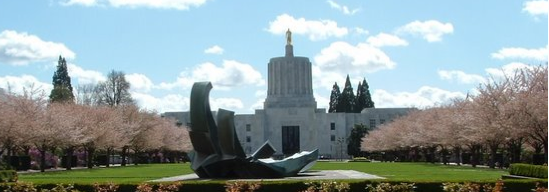
| Pretty but deadly to organic farmers |
The Oregon Ag. Dept. proposes to sacrifice the livelihood of small farmers and nursery growers, just to allow Big Ag to grow genetically modified canola so that they can suck up big subsidy dollars for canola as "biofuel."
Despite the evidence of genetic drift every time genetically altered crops are planted out, Oregon Ag is pushing this scheme.
The worst part is that this is an irrevocable blunder. Once the gene modified crops are introduced, we will get gene drift, as canola is promiscuous, and all the brassica seed growers up and down the valley will be destroyed, as they will lose the organic certification for their seeds. Then the big growers will benefit from destroying their neighbors' livelihoods.
If we let canola into the valley, we're trading top-dollar, high value, unique nursery crops for a cheap commodity canola that can be grown anywhere and that we don't need grown anywhere.
Call your state reps and senators and tell them to PROTECT THE VALLEY, SUPPORT HB 2427
Esp. if you live in Brian Clem's district, call! He sits on (and is a former chair of House Ag Committee), and he's taking the position that it's up to Oregon Ag. to decide this -- but Oregon Ag Department follows the money, not the best interests of the people of the Willamette Valley.
We are in a critical juncture in our fight to protect our seed & vegetable growers in the Willamette Valley from the threats posed by canola, and we need you to weigh in with the Oregon Legislature.
The canola issue is coming up before the legislature in the form of HB 2427 and we have a chance to restore the protections that were in place until very recently. While we and our allied farmers won a lawsuit against ODA’s canola rule last fall, they have gone ahead despite the opposition, with a new rule that opens up half the Willamette Valley to the dangers of canola, and the Legislature is now our best hope to win this fight.
In the coming days, the House Agriculture and Natural Resources Committee is expected to take up a debate on HB 2427 and canola. Many legislators are still ‘on the fence’ on this issue and a call and email from you WILL help make a difference at this critical time. Many legislators are simply inclined to listen to ODA because they view them as the "experts" on agriculture, but ODA has ignored important research on the impacts of canola in the Willamette Valley, and instead has yielded to pressure from the biofuel industry and a handful of growers who would benefit from introducing this controversial crop.
At a February 14 Senate hearing, ODA Director Katy Coba told the committee that "it's fair to say in other parts of the world specialty seed industries have been destroyed by large amounts of canola. And that there is a level of canola where you do jeopardize specialty seeds but we just don't know what that acreage is." Our question is, if this is the case, why is the ODA gambling with the future of the Willamette Valley and our food supply? Canola poses major threats to specialty vegetable seed, fresh market vegetable, and clover producers by incubating several devastating pest and diseases and physically contaminating seed lots. These industries together are worth over $100 million annually in agricultural production, and sustain many farm families.
Further, the vast majority of canola is genetically engineered to be herbicide resistant, which adds an additional threat to our organic vegetable and seed industries, as cross-pollination with canola contaminates organic crops, eliminating their value, and cross-pollination between canola and certain weeds can lead to ‘super-weeds’ that will require more aggressive herbicides to control.
Your State Representative needs to hear from you as a constituent to give them the push they need to do the right thing as HB 2427 is debated and comes up for a vote.
Not sure who your legislator is? Use this link: http://www.leg.state.or.us/findlegsltr/
To send your legislator an email use this link: http://www.leg.state.or.us/writelegsltr/
Here is a sample script. Please add any personal perspectives on this issue and what it means to you as a farmer or eater:
Dear Rep. _____Thank you for your continued efforts in this fight!
My name is ___. As your constituent, I strongly urge you to support HB 2427. The Willamette Valley is the heart of Oregonʼs lucrative specialty seed, fresh market vegetable, clover, and organic industries. It is recognized for having unique a climate and the perfect conditions which have allowed these industries to thrive.
The Willamette Valley should be preserved and protected for these special purposes from the pest, weed and cross-contamination risks from canola. Allowing canola production in the Willamette Valley protected district would undermine this world-renowned resource, and the Valley’s economically important vegetable seed production industry, and large network of vegetable growers as well as our local food supply.
The Oregon Department of Agriculture made a major mistake by abruptly changing the rules to open up significant portions of the Willamette Valley to canola earlier this year, abandoning its long-standing and science-backed protections that prevented canola from contaminating the Willamette Valley.
Canola can be, and is, grown in most of the rest of Oregon. Let’s keep it that way.
Please support HB 2427 and restore protections from canola to our one-of-a-kind Willamette Valley.
Sincerely,


 Posts


