Saturday, September 27, 2014

Mark your calendar for a good cause,10/17, 7:30 p.m.

"Let's live on the planet as if we intend to stay."

"Songs of Civil Disobedience . . . and Hope" : 7:30 pm Friday, October 17,
2014, at St. Paul's Episcopal Church 1444 Liberty Road SE.

The concert is free, donations accepted at the door, with proceeds going to
Congregations Helping People.

The program features local musicians performing songs by
Pete Seeger, Bob Dylan, Paul Simon, Malvina Reynolds, Woodie Guthrie - and
more! Audience will be invited to sing along with many of the songs. Please
join us for a very fun evening of music and community in the Pete Seeger
style and support this important program.

www.chpsalem.org

Friday, September 26, 2014

Wednesday, September 24, 2014

Celebrate the Freedom to Read, Sept 21-28

Banned Books Week is an annual event, observed nationally, that celebrates the right to read.

Anyone who has read “The Hunger Games”, “Gone with the Wind”, “The Great Gatsby”, or even “The Adventures of Captain Underpants”, has read a book that has been challenged or banned at a library or in a classroom somewhere in the United States.

According to the American Library Association’s website, “Banned Books Week brings together the entire book community - librarians, booksellers, publishers, journalists, teachers, and readers of all types - in shared support of the freedom to seek and to express ideas, even those some consider unorthodox or unpopular.”

This year’s Banned Books Week takes place September 21-28.

At Salem Public Library, there will be a display of books that have been challenged or banned, booklists, and also an interactive activity designed to test participants’ knowledge of well-known, but sometimes controversial, books. 

Those who can identify any one of six banned books from the evidence presented will be awarded an “I Read Banned Books” pin.  Intrigued?  Stop by the Information desk at Salem Public Library’s Main branch to learn more.

For more information on Banned Books Week visit Salem Public Library’s website at www.salemlibrary.org, or call 503-588-6052.

Tuesday, September 23, 2014

Salem's the place

Assuming, of course, that we can pull our heads out of the sand and start spending on local resiliency and not in a vain effort to resume sprawling and restarting financial bubbles.

"Let's live on the planet as if we intend to stay."


10. On a warmer planet, which cities will be safest?
Alaskans, stay in Alaska. People in the Midwest and the Pacific Northwest, sit tight. Scientists trying to predict the consequences of climate change say that they see few havens from the storms, floods and droughts that are sure to intensify over the coming decades. But some regions, they add, will fare much better than others... "The answer is the Pacific Northwest, and probably especially west of the Cascades," said Ben Strauss, vice president for climate impacts and director of the program on sea level rise at Climate Central, a research collaboration of scientists and journalists. "Actually, the strip of coastal land running from Canada down to the Bay Area is probably the best," he added.
New York Times, September 23

Monday, September 22, 2014

The High Cost of Non-Resilient Infrastructure [feedly]

The always excellent Breakfast on Bikes has a good piece on the foolishness of planning for a giant new bridge while ignoring the condition of the existing ones.


Now a good follow up to that below from Next City Daily:

----
The High Cost of Non-Resilient Infrastructure
// Next City Daily

Manhattan's flooded FDR Drive after Hurricane Sandy (Photo by David Shankbone via Flickr)

Sandy made New Yorkers, and all Americans, painfully aware of the need for more resilient city infrastructure. Resilience has since become a buzzword in planning circles, often understood to mean either robustness (for instance, a substation that's totally flood-proof) or redundancy (multiple microgrids that can operate separately in case of a shock to the system). According to a new report, resilience encompasses both of these qualities, but also many more: flexibility, responsiveness, coordination and learning to live with unavoidable uncertainty and risk.

The report, Toolkit for Resilient Cities, sprang from a desire to broaden how people think about preparing cities for climate impacts, says one of the authors, Stephen Cook, an energy and climate change consultant with Arup in London. "It's not just about flood defenses and raising the barriers," he says. "It's about understanding how infrastructure systems interact with the rest of the city, and how they can together create a resilient city."

Written by researchers from Arup, Siemens and the non-profit Regional Plan Association, the report defines resilience as "[t]he capacity of people, organizations and systems to prepare for, respond, recover from and thrive in the face of hazards, and to adjust to continual change." Its authors note that between 2000 and 2012, natural disasters around the world caused $1.7 trillion in damages. Extreme weather events are happening with more frequency, while the global population (especially in cities) continues to grow. In other words, the problem is only becoming more urgent.

Toolkit for Resilient Cities outlines how cities can enhance the resilience of their infrastructure systems to prepare for the next Sandy (or the next drought, heat wave or blizzard). It focuses on the infrastructure supporting energy, transportation, water and buildings, because this "underpin[s] many other essential city operations and services, including sanitation, emergency response, and the delivery of food, fuel and other materials."

The report's recommendations range from highly specific and technical — moving critical power lines underground, installing leak-detection sensors along pipelines — to broader measures such as integrating resilience practices into planning and construction, and reconciling top-down urban governance with grassroots leadership for effective disaster response.

Changes to the human systems involved in resilience aren't just gloss, Cook says — they're absolutely crucial. Cook and his co-authors emphasize the importance of collaborative governance, farsighted land use policies, sensitive urban design, and extensive data gathering and analysis. "It's not just about infrastructure and technology. Without that enabling framework, putting the other pieces in place, their full potential just won't be realized."

A case study within the report looks at vulnerabilities in New York City's electrical grid and suggests steps that would mitigate the risk to it. Our very understanding of that risk needs to change, too; historically, New York experienced significant flooding about once a century, but climate projections put that closer to once every 15 years in the future. And there are new risks to consider, like tornadoes that have hit the city every year since 2010.

The researchers plot three courses that New York can take with regard to the resilience of the grid. The first is to do nothing, which has a price tag of about $3 billion over 20 years. The second is to increase the grid's robustness by waterproofing substations and equipment, putting power lines underground and other such measures. This would reduce the cost of repairs and emergency response by about $2 billion.

"However, the robustness investments provide only a defensive solution which can at best reduce losses," the authors point out. The third course, "full investment" in smart technologies like distributed generation and strategies like demand reduction, would cost $3 billion to implement. It would not only pay for itself, but deliver an estimated $4 billion of added benefits through energy efficiency and reduced disruption to businesses.

Cook acknowledges there are barriers to cities getting on board with an aggressive plan like this. Many cities are strapped for cash, and it's hard to justify spending money today to solve the problems of tomorrow. Financing infrastructure upgrades remains a major hurdle. But the good news is that the technologies described in the report are developed and proven, not experimental — cities can adopt them today if they choose to.

Take, for example, Co-Op City, a housing development in the Bronx. Its microgrid serves 60,000 residents in 35 buildings. During and after Sandy, it continued to provide heat, electricity and hot water as large sections of the city struggled with a days-long outage. The microgrid required an upfront investment, but it sold surplus power back to the larger grid, and paid for itself within five years.

Now imagine if the microgrid had been "talking" to response teams or feeding power to critical facilities that needed it. Cook thinks we're not far from having this sort of real-time information about a city's physical assets, the way we already do about traffic congestion. "It's about … getting closer and closer to real-time information," he says, "and then having the capability to process what's going on" during a disaster, when every moment counts.


Shared via my feedly reader

"Let's live on the planet as if we intend to stay."

Sunday, September 21, 2014

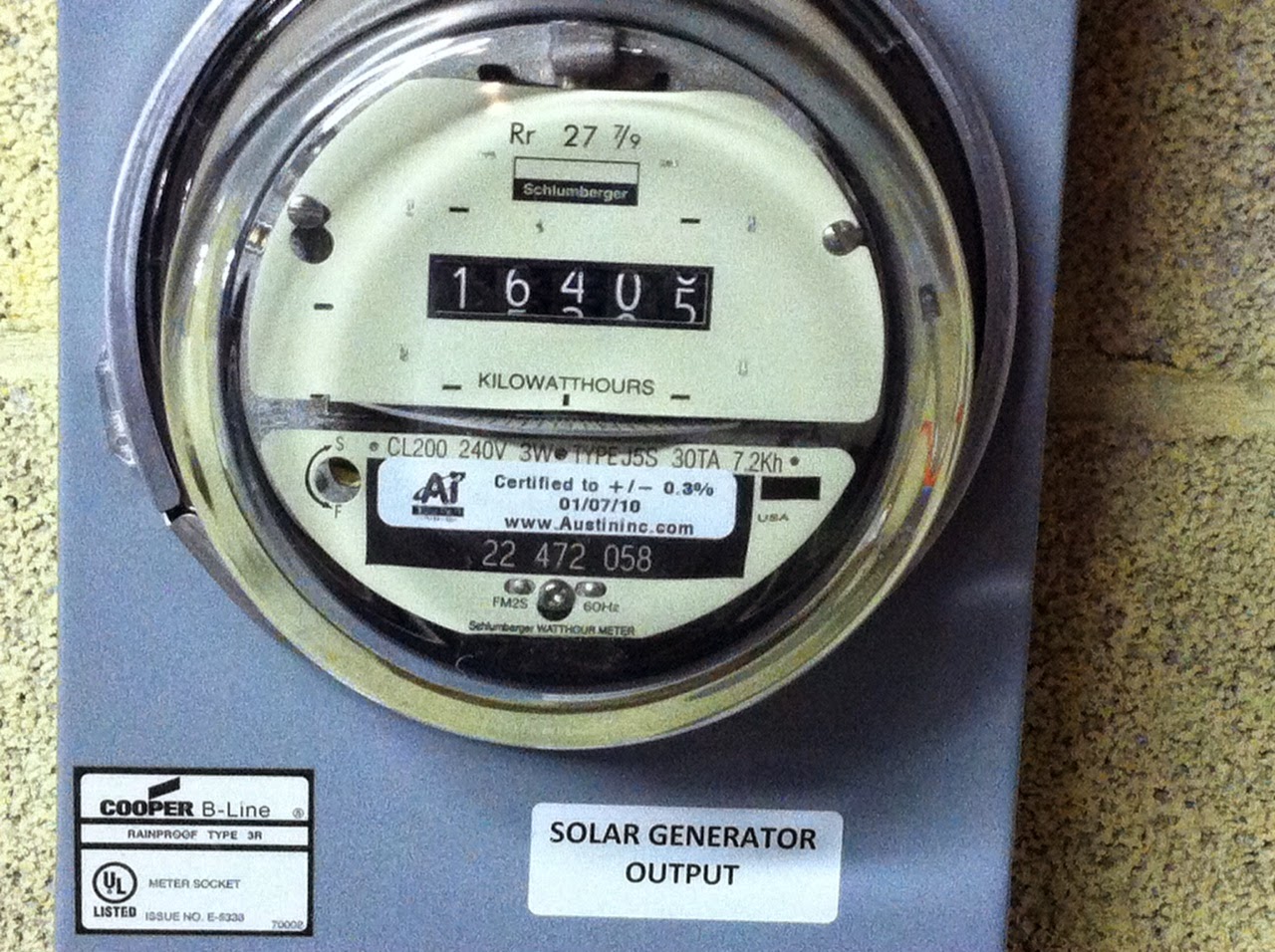
Vernal Equinox 2014, 3.75 years of solar power harvesting

What Salem's bridges will do when the next Cascadia 9 quake hits


We have tremendous challenges ahead of us, and will need all our wits and resources to maintain Salem's quality of life in the years ahead, as the twin crises of climate disruption and the end of cheap energy make all our choices harder and our conditioned responses even less helpful. 

One of the few things we can say with certainty is that there is a mega quake already in the cards for us (overdue, judging by historical averages) and that all our physical infrastructure planning has to start with that reality, and make the best choices possible about using our all-too-limited resources as wisely as we can.

Good choices would be bolstering our existing bridges to survive a CAT 9 quake.  A terrible choice would be squandering hundreds of millions of dollars ... A billion or more when all is said and done and paid over time ...on a highway bridge to serve no real purpose other than to try to restart the sprawl go-go years in Polk County to make real estate speculators and developers rich.

People have this idea that less developed countries are uniformly poor, which is absolutely not the case. What characterizes those places is a model of economic inequality, where the government really only serves the well off, building big mega projects for the benefit of well-wired friends of the elites and ignoring the needs of the greatest number of folks for the basics: good public health, transit, education, food security.  What's shameful is that Salem increasingly resembles these places -- we build convention centers instead of branch libraries and squander millions on an airport that's the private playpen for the well-heeled, while there is a ragtag, starving transit system, and rampant food insecurity.


"Let's live on the planet as if we intend to stay."

Saturday, September 20, 2014

You're needed tomorrow in Salem

"Let's live on the planet as if we intend to stay."

Subject: You're needed tomorrow, no matter where you are.
Reply-To: 350@350.org

Friends,

To change everything, we need everyone.

And this weekend, the action is indeed happening everywhere:

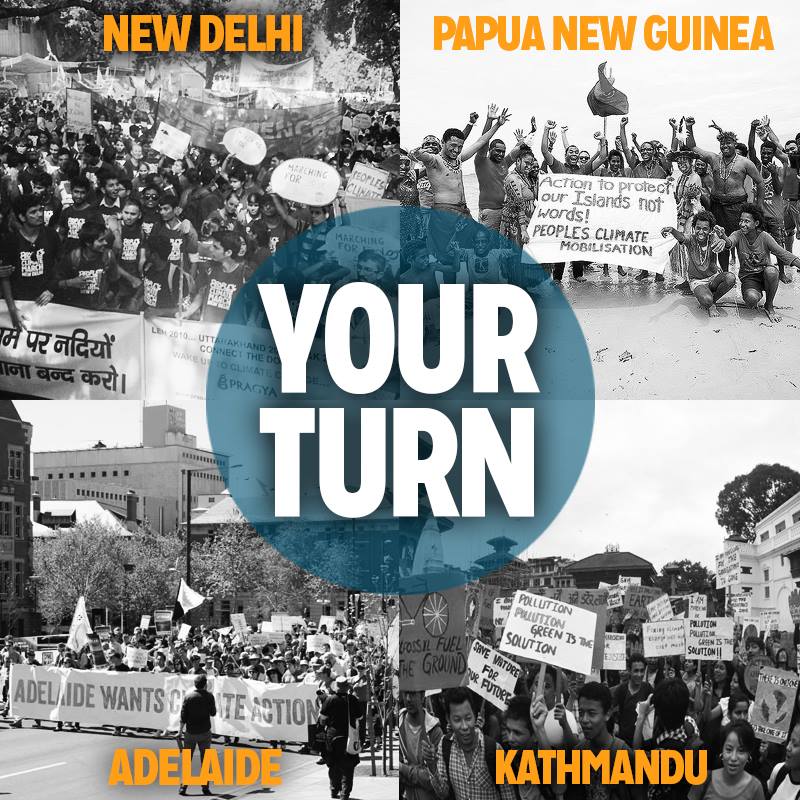
Rallies in Lisbon and Delhi, marches in Istanbul, Manila, Cape Town, Majuro and Papua New Guinea, concerts in Johannesburg -- this is true people powered movement: enormous, diverse and beautiful. People from all backgrounds are acting locally, mobilising their communities, shaping the future of our planet. And this is before big actions get underway tomorrow.

Here in North America, the action isn't just in New York City. People everywhere are standing up for climate justice, with dozens of People's Climate Mobilization actions from coast to coast. I'm awfully happy I moved to New York City so I can march here, but my hometown in California is also hosting a march. The action is everywhere!

Together, we're going to form the biggest push for climate action in the planet's history. To find a People's Climate Mobilization action near you, click here.

Also, you can tune in and spread the word about the big New York march online. The PeoplesClimate.org website will make it easy to watch the whole march via livestream, and share all the breaking news and beautiful photos with your social networks.

Starting at 10:30 AM Eastern Time on Sunday, go to PeoplesClimate.org, and click "play" on the video player that will be front and center to watch the march live from the streets of New York.

To follow along on social networks, just search for posts with the hashtag #PeoplesClimate -- that's what everyone will be posting with during the march and from actions across the world.

You can see #PeoplesClimate posts streaming in from across the world at the March page tomorrow too -- just scroll down below the video stream to see all the posts from People's Climate actions, and share your favorites.

This is a moment that needs everyone. No matter where you'll be this weekend, you can help make this a turning point for our movement, and our climate.

Thank you for everything. Let's do this.

May


350.org is building a global climate movement. Become a sustaining donor to keep this movement strong and growing.

The former SJ printing plant would be ideal

Community cycling center could be in Salem's future
The former printing plant for the Statesman-Journal, an industrial facility with abundant room to securely store and segregate bike parts for recycling, a building that now sits empty and idle, is right next to the transit mall and the YMCA.  This would be a PERFECT location for such a valuable program.

Perhaps a fabulously wealthy corporation like Gannett could spare it and allow it to be put to good use.

Community cycling center could be in Salem's future

Two programs with a proven track record of training divested residents bike repair skills and providing two-wheel transportation to people in need are joining forces to open a community cycling center.

The folks behind NW HUB and 2nd Chance Bicycle Recycling program hope to open a center as soon as they raise the money or find a donor for a bigger space. 2nd Chance started two years ago at Hillcrest Youth Correctional Facility to give youth a chance to learn skills and give back.

NW HUB opened last year and offers residents the chance to earn a bike by putting in the hours at the shop to "pay" for it. The makeshift bike shop springs up at Evergreen Church three times a week with volunteers and bike parts spilling out into the courtyard on Cottage Street NE.


.. . .


The biggest barrier to opening the center is getting a space big enough to run the shop. NW HUB, housed in the basement of Evergreen Church, is bursting at the seams and 2nd Chance Recycling is confined to Hillcrest. NW HUB is hosting a benefit ride Sept. 27 in hopes of raising money for a space, but Seyfert would also snap up any offers from local organizations with extra space.


"Let's live on the planet as if we intend to stay."

Friday, September 19, 2014

Krugman - better than a free lunch

Brooks and Krugman | Marion in Savannah
It's true that the universe doesn't provide free lunches. But when you've been acting insanely stupidly, STOPPING feels like a free lunch and more, a lunch you get paid to eat.  Since driving the planet's climate stability into the ditch is insanely stupid and destructive of our own health, now and for centuries to come, it is true that there's a free lunch to be had by getting smart on energy use and climate disruption.

This is all a good topic for the Sunday party this Sunday, 9/21, at Riverfront Park at 2 p.m.


This just in: Saving the planet would be cheap; it might even be free. But will anyone believe the good news?

I've just been reading two new reports on the economics of fighting climate change: a big study by a blue-ribbon international group, the New Climate Economy Project, and a working paper from the International Monetary Fund. Both claim that strong measures to limit carbon emissions would have hardly any negative effect on economic growth, and might actually lead to faster growth. This may sound too good to be true, but it isn't. These are serious, careful analyses.

But you know that such assessments will be met with claims that it's impossible to break the link between economic growth and ever-rising emissions of greenhouse gases, a position I think of as "climate despair." The most dangerous proponents of climate despair are on the anti-environmentalist right. But they receive aid and comfort from other groups, including some on the left, who have their own reasons for getting it wrong.

Where is the new optimism about climate change and growth coming from? It has long been clear that a well-thought-out strategy of emissions control, in particular one that puts a price on carbon via either an emissions tax or a cap-and-trade scheme, would cost much less than the usual suspects want you to think. But the economics of climate protection look even better now than they did a few years ago.

On one side, there has been dramatic progress in renewable energy technology, with the costs of solar power, in particular, plunging, down by half just since 2010. Renewables have their limitations — basically, the sun doesn't always shine, and the wind doesn't always blow — but if you think that an economy getting a lot of its power from wind farms and solar panels is a hippie fantasy, you're the one out of touch with reality.

On the other side, it turns out that putting a price on carbon would have large "co-benefits" — positive effects over and above the reduction in climate risks — and that these benefits would come fairly quickly. The most important of these co-benefits, according to the I.M.F. paper, would involve public health: burning coal causes many respiratory ailments, which drive up medical costs and reduce productivity.

And thanks to these co-benefits, the paper argues, one argument often made against carbon pricing — that it's not worth doing unless we can get a global agreement — is wrong. Even without an international agreement, there are ample reasons to take action against the climate threat.

But back to the main point: It's easier to slash emissions than seemed possible even a few years ago, and reduced emissions would produce large benefits in the short-to-medium run. So saving the planet would be cheap and maybe even come free.

Enter the prophets of climate despair, who wave away all this analysis and declare that the only way to limit carbon emissions is to bring an end to economic growth.

You mostly hear this from people on the right, who normally say that free-market economies are endlessly flexible and creative. But when you propose putting a price on carbon, suddenly they insist that industry will be completely incapable of adapting to changed incentives. Why, it's almost as if they're looking for excuses to avoid confronting climate change, and, in particular, to avoid anything that hurts fossil-fuel interests, no matter how beneficial to everyone else.

But climate despair produces some odd bedfellows: Koch-fueled insistence that emission limits would kill economic growth is echoed by some who see this as an argument not against climate action, but against growth. You can find this attitude in the mostly European "degrowth" movement, or in American groups like the Post Carbon Institute; I've encountered claims that saving the planet requires an end to growth at left-leaning meetings on "rethinking economics." To be fair, anti-growth environmentalism is a marginal position even on the left, but it's widespread enough to call out nonetheless.

And you sometimes see hard scientists making arguments along the same lines, largely (I think) because they don't understand what economic growth means. They think of it as a crude, physical thing, a matter simply of producing more stuff, and don't take into account the many choices — about what to consume, about which technologies to use — that go into producing a dollar's worth of G.D.P.

So here's what you need to know: Climate despair is all wrong. The idea that economic growth and climate action are incompatible may sound hardheaded and realistic, but it's actually a fuzzy-minded misconception. If we ever get past the special interests and ideology that have blocked action to save the planet, we'll find that it's cheaper and easier than almost anyone imagines.