http://read.feedly.com/html?url=http%3A%2F%2Fspectrum.ieee.org%2Fenergy%2Frenewables%2Fwhat-it-would-really-take-to-reverse-climate-change&theme=white&size=medium
----
Shared via my feedly reader
"Let's live on the planet as if we intend to stay."
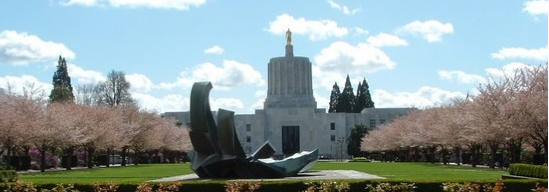
STRONG Salem is for everyone who wants to help and participate in getting Salem, Oregon, to quit chasing Growth Ponzi Scheme plans and instead become a resilient, fiscally responsible place that lives by the wisdom that "Communities exist for the health and enjoyment of those who live in them, not for the convenience of those who drive through them, fly over them, or exploit their real estate for profit."
From: Strong Towns <team@strongtowns.org>
Subject: Reminder: Transportation in the Next American City TOMORROW
NationBuilder
![]()
Strong Towns
Tomorrow, November 25 is our next Strong Towns webinar. As you may have seen over social media and the blog, we have a new presentation and initiative called Transportation in the Next American City. It has been in beta test over the last two months and now we want your feedback. See the overview description below. We will start at 12:00 PM Central Time. To participate, simply log in to the Webinar portal on the member site.
Transportation in the Next American City
When: 12PM Central Time - November 25
Where: Click here to login
You must be a member to attend so, if you haven't signed up, now is a great time. We are chipping away at our goal of 324 more members by the end of the year - we're down to just 248 left. Join today and help us while getting a little something in the return.
Can't make it Tuesday? We'll be recording it and making that available on the Strong Towns Membership platform at www.strongtowns.us after the webinar. Visit the webinar portal page via the link in the right sidebar.
TRANSPORTATION IN THE NEXT AMERICAN CITY
Overview: For more than six decades, local governments have been accustomed to building new transportation infrastructure, expanding existing systems in addition to constructing completely new facilities. While liabilities have grown, transportation funding has not kept up. Now there is a desperate need for local governments to shift from building to maintaining, from an approach that emphasizes expansion to one where we mature our use of existing investments. In difficult economic times, this is a scary, but necessary, realignment.
Topics Covered:
- A brief history of how we arrived at the current set of problems, particularly how centralization and an abundance of funding created short-term efficiencies but has stifled the development of alternative approaches.
- Identification of the reasons why local governments find themselves stuck in the current paradigm and strategies for overcoming these obstacles.
- The important difference between a road and a street and how to get the most out of each.
- How to productively respond to congestion and safety problems within an urban environment.
- The role of state and federal funding in local transportation decisions. How to get the most out of these funding sources without compromising the financial health of the community.
- Dealing with resistance to change from public safety and maintenance staff.
- The role of transit in creating a balanced portfolio of transportation options.
Strong Towns
http://www.strongtowns.us/Strong Towns ·
You can also keep up with Strong Towns on Twitter or Facebook.Created with NationBuilder, the essential toolkit for leaders.
![]()
Real Dirt
November 2014
The Youth Farm is a collaborative educational project of the Marion-Polk Food Share and OSU Extension 4-H Youth Development Program that is aimed at increasing the quality, diversity, and stability of local food systems. Located in the heart of Salem on the Oregon School for the Deaf campus,
our two acre Youth Farm engages secondary school students in running a small farm business and develops a new generation of farmers and activists committed to providing access to healthy, fresh food for all members of our community.
Read the complete article here.
"Let's live on the planet as if we intend to stay."A black elephant, explained the London-based investor and environmentalist Adam Sweidan, is a cross between "a black swan" (an unlikely, unexpected event with enormous ramifications) and the "elephant in the room" (a problem that is visible to everyone, yet no one still wants to address it) even though we know that one day it will have vast, black-swan-like consequences.
"Currently," said Sweidan, "there are a herd of environmental black elephants gathering out there" — global warming, deforestation, ocean acidification, mass extinction and massive fresh water pollution. "When they hit, we'll claim they were black swans no one could have predicted, but, in fact, they are black elephants, very visible right now." We're just not dealing with them at the scale necessary. If they all stampede at once, watch out.
...
It starts with a simple fact: Protected forests, marine sanctuaries and national parks are not zoos, not just places to see nature. "They are the basic life support systems" that provide the clean air and water, food, fisheries, recreation, stable temperatures and natural coastal protections "that sustain us humans," said Russ Mittermeier, one of the world's leading primatologists who was here.
That's why "conservation is self-preservation," says Adrian Steirn, the South Africa-based photographer who spoke here. Every dollar we invest in protecting natural systems earns or saves multiple dollars back. Ask the people of São Paulo, Brazil. They deforested hillsides, destroyed their watersheds, and now that they're in prolonged drought, they're running out of water, losing thousands of jobs a month. Watch that story.
Walking around the exhibit halls here, I was hit with the reality that what we call "parks" are really the heart, lungs, and circulatory systems of the world — and they're all endangered.
...
John Gross, an ecologist with the U.S. National Park Service, who has worked in Yellowstone for 20 years, uses a NASA simulation to show me how the average temperature in Yellowstone has been rising and the impact this is having on the snowpack, which is now melting earlier each spring, meaning more water loss through evaporation and rapid runoff, lengthening the fire season. But, hey, it's just a park, right?
People forget: Yellowstone National Park is "the major source of water for both the Yellowstone and the Snake Rivers," said Gross. "Millions of people" — farmers, ranchers and communities — "need those two rivers." Yellowstone's snowpack is their water tower, and its forest their water filters. Its integrity really matters. What happens in Yellowstone, doesn't stay in Yellowstone.
...
Carlos Manuel Rodríguez, Costa Rica's former minister of environment and energy and now a vice president of Conservation International, explains to me the politics of parks — and the difference between countries that have their forest service under the minister of agriculture and those where the forest service is under the minister of environment or independent. Agriculture ministers see natural forests and parks "as timber that should be chopped down for something 'productive,' like soybeans, cattle or oil palm," said Rodríguez. Forest services and environment ministers "see their forests as carbon stocks, biodiversity reservoirs, water factories, food production plants, climate adaptation machines and tourism sites," and protect them.
Guess who's in the first group? Honduras and Guatemala, where many people live on degraded hillsides. Some 50,000 children have been sent from Central America to the U.S. this year — unaccompanied. Where did they come from? Honduras, Guatemala and El Salvador, Central America's most deforested states. They cut their forests; we got their kids.
. . .
November 20, 2014
Neil Young starts Starbucks boycott over GMO suit
Rolling Stone - Neil Young is seeking a new source for his daily latte. The rocker announced on his website this week that he's boycotting Starbucks over the coffee company's involvement in a lawsuit against the state of Vermont's new requirements to label genetically modified ingredients.
"I used to line up and get my latte everyday, but yesterday was my last one," Young wrote. "Starbucks has teamed up with Monsanto to sue Vermont, and stop accurate food labeling."
Vermont passed a law last spring that requires all food products containing GMOs to be labeled as such by July 1, 2016, with the exception of dairy products, meat, alcohol and food served in restaurants. Shortly afterward, four food industry organizations filed a lawsuit against the state that challenged the law's constitutionality...
"Monsanto might not care what we think -- but as a public-facing company, Starbucks does," Young wrote. "If we can generate enough attention, we can push Starbucks to withdraw its support for the lawsuit, and then pressure other companies to do the same."
"Considering that Starbucks has been progressive on LGBT and labor issues in the past, it's disappointing that it is working with the biggest villain of them all, Monsanto," he continued.
"There's much more at stake here than just whether GMO foods will be labeled in a single U.S. state. Vermont is the very first state in the U.S. to require labeling. Dozens of other states have said that they will follow this path -- in order to encourage this, we need to ensure that Vermont's law stands strong.
Jan 19, 2008: LOVESalem reaches the web, bringing a vitally needed message to Oregon's capital city: We must Oregon-ize to put the needs of people before the needs of cars. This requires that we live our environmental values -- that we LOVE (Live Our Values Environmentally) Salem -- by working to stop the Sprawl Machine.
The Sprawl Machine is a ravenous beast that feeds on green space, close-in neighborhoods, and property taxes and that excretes monstrous, ugly road projects that pollute the air, increase mortality and morbidity, promote climate change, weaken families and neighborhoods, and help weaken the social fabric and civic participation.
The Sprawl Machine works by constantly luring its prey with promises that the problems created by cars can be addressed by doing more of the same -- building more lanes, more bridges, consuming ever more money. In other words, the Sprawl Machine promises that we can keep doing the same thing over and over, while expecting a different result this time.
To subscribe and receive updates whenever new items are posted, go to the "Subscribe" link at the bottom of this page.