How Being a Doctor Became the Most Miserable Profession
Nine of 10 doctors discourage others from joining the profession, and 300 physicians commit suicide every year. When did it get this bad?
By the end of this year, it's estimated that 300 physicians will commit suicide. While depression amongst physicians is not new—a few years back, it was named the second-most suicidal occupation—the level of sheer unhappiness amongst physicians is on the rise.
Simply put, being a doctor has become a miserable and humiliating undertaking. Indeed, many doctors feel that America has declared war on physicians—and both physicians and patients are the losers.. . . (More at the source)
Friday, April 18, 2014
How Being a Doctor Became the Most Miserable Profession - The Daily Beast
Thursday, April 17, 2014
Neil DeGrasse Tyson Said What He Thinks About Race Now That He's Made It, And Almost Nobody Noticed
To set the scene, the (poorly posed) question is referring to comments made by former Treasury Security and Harvard University President Lawrence Summers, who suggested that genetic differences could explain why there are fewer girls in science. Yup, he really was Treasury secretary and president of Harvard.
Neil deGrasse Tyson's answer is, um, out of this world. There, I said it. Let me have this one.
Wednesday, April 16, 2014
Vital reading on the supposed "oil boom"
http://www.csmonitor.com/Environment/Energy-Voices/2014/0416/Has-crude-oil-production-already-peaked
Monday, April 14, 2014
Plan now for May 1, 7 p.m. At Grand Theatre: The Healthcare Movie
Drive for Universal Health Care (DUH)
Health care activists from the east have been conducting a bus tour/caravan through the US and are now in California, headed for Oregon. They are expected to arrive in Grants Pass, accompanied by Laurie Simons and Terry Sterrenberg, producers of The Healthcare Movie, and singer-songwriter Bob Wickline, on Sunday, April 27. The schedule:These events will include a screening of The Healthcare Movie, with live performances by Bob Wickline, and panel discussions afterwards with filmmakers Simons and Sterrenberg, DUH activists Sue Saltmarsh and Donna Ellington, and local advocates. In addition, supporters are invited to drive with the caravan from city to city. Each car will be responsible for their own expenses and will decide how far they want to go. Identifying ribbons and bumper stickers will be supplied to all drivers!
- April 27, 2:00-5:00 p.m., Unitarian Universalist Church, 525 NE 6th St., Grant's Pass
- April 28, 6:30 p.m. Bijou Art Cinema, 492 13th Ave., Eugene
- April 30, 7:00 p.m., First Unitarian Universalist Church, Elliot Chapel, 1011 SW 12th Ave., Portland
- May 1, 7:00 p.m., Grand Theatre, 191 High St. NE, Salem
Find updates and details of the tour here.
Sunday, April 13, 2014
Energy and the Financial System: What Everyone Needs to Know… and Work Darn Hard to Avoid
Peak oil theorists have long been regarded by mainstream economists as the boys and girls who cried wolf. But just because the outlooks of mainstream economists failed to see the wolf does not mean it was not there. Rather, according to Roger Boyd's Energy and the Financial System: What Every Economist, Financial Analyst, and Investor Needs to Know, a rather large pack of wolves have been with us for quite some time now and our failure to deal with them has meant that they have grown in strength such that jointly they could derail the global economy.
To call Boyd a peak oil theorist, however, would be to reduce the complexity of his view for according to Boyd it is not only the availability of cheap oil that is in decline but rather what is in decline is the general availability of energy sources which provide a high amount of energy in return for energy invested. Indeed, Boyd's view revolves around a measure economists refer to as EROI, which measures the ratio between the amount of energy returned relative to energy invested. Thus we might better label Boyd a peak EROI Theorist for he believes that increasingly we will need to invest more energy in order to get energy back, as we have used up the vast majority of easily accessible high energy sources of oil, natural gas and to a lesser extent coal.
The importance of EROI is that to a large extent it determines the prosperity of society. The higher the EROI, the higher the prosperity levels, as we are able to direct more energy back into society rather than into producing more energy. According to Boyd, "our modern societies have become so hooked on nearly-free energy… with an EROI of at least 8 : 1 being required to maintain the high living standards and complex society to which we have become accustomed". Higher up the sophistication level Boyd cites that a societal EROI of up to 14:1 is required to support such things as good education, health care, and the arts. As the EROI continues to drop, however, it is not only the arts that we have to worry about, rather as Boyd's book illustrates the implications are potentially far reaching and devastating with the potential to reverse global prosperity and to do so rather unequally. . . .
Saturday, April 12, 2014
Orwell rules: Oregon transportation funding could fall by $500M [feedly]
----
Oregon transportation funding could fall by $500M
// StatesmanJournal.com - News
People are driving less, and their vehicles have become more fuel efficient.
Rethinking city lots and the deeper cause of our decay
Our property tax system is a relic from a vastly different era, and it's serving us about as well as a medical procedures manual from the 1700s would serve a physician. Until we address this root cause of urban property development distortion, we are going to continue to have downtowns like Salem's -- littered with vacant lots serving only for the care, feeding, and storage of autos, next to far too many vacant storefronts, in a city with overwhelmed human services and declining public services, lots of homeless folks, and sprawl development at the periphery suctioning resources away from the core so that real estate interests can keep pouring new pavement for profit, while sticking the rest of us with the tab.
----
http://www.planetizen.com/node/68277
----
Thursday, April 10, 2014
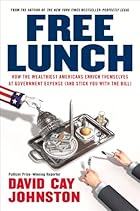
David Cay Johnston, Loucks Auditorium 3 pm, Sat. May 3rd
http://www.davidcayjohnston.com
If your blood isn't boiling after hearing him, you're either dead or among the 1%.
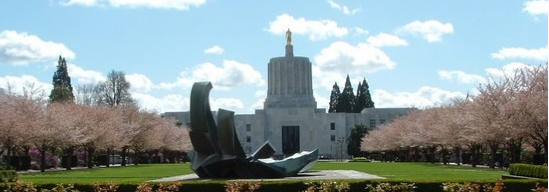
Loucks is next to the main branch of the Salem Public Library, which is at 555 Liberty St SE in Salem.
I'd tell you which bus routes it is on, but Salem's public transit system is down there with third-world places like Rwanda, so we have no weekend transit, and so knowing the bus routes will do you good to hear David Cay Johnston, who will likely talk about how disinvestment in public goods like transit has been startlingly effective in helping us have third world levels of inequality as well.