Thursday, June 18, 2009


Wednesday, June 17, 2009
The Zombie Project: A third auto bridge over the Willamette in Salem
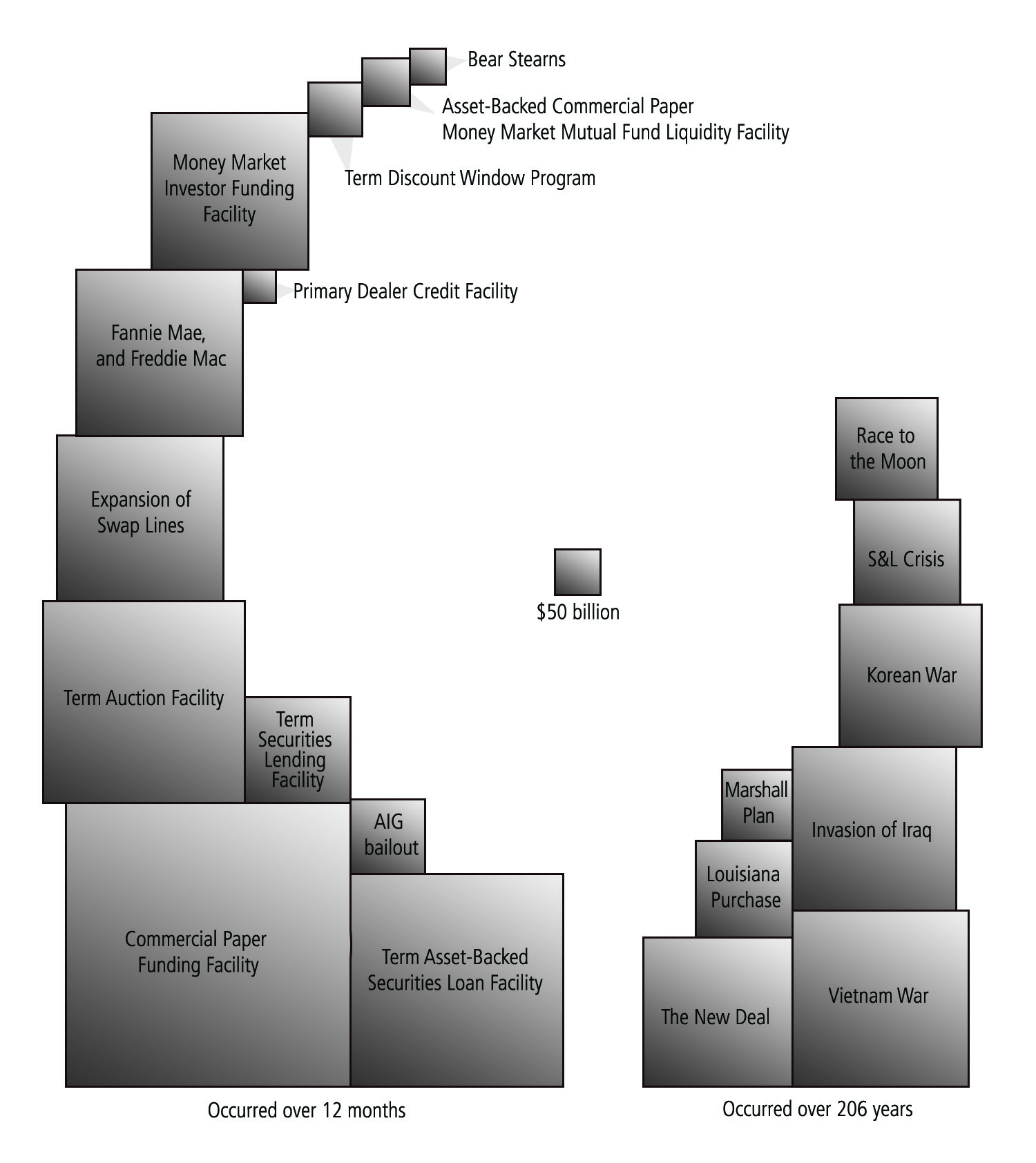
 This guy is in Iraq because we use 25% of the world's daily oil consumption rather than building transit systems and providing options for people that don't involve driving. A third auto bridge in Salem would be a monument to our failure to recognize the end of the carburban way of life and our willingness to let others die overseas so that we can keep right on driving multi-thousand pound vehicles for our every trip here at home. Image via Wikipedia
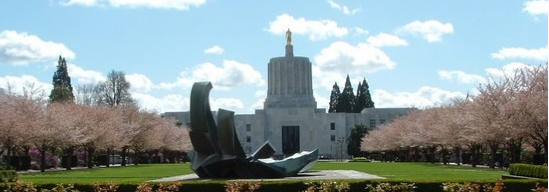
Here in Salem, the group organized to push through a $600+ million bridge project was finally shamed into remembering that they were not supposed to be locked into planning a bridge as order of business one and only.
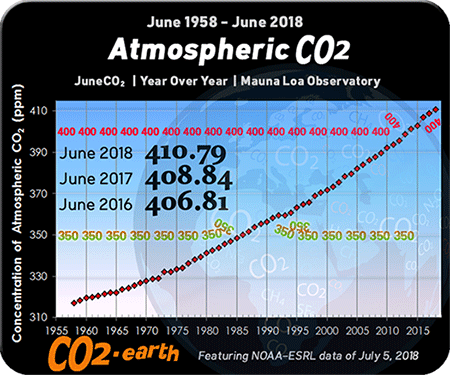
Naturally, they have only grudgingly begin to begin thinking about pondering alternatives to more autosprawl (meanwhile, busily beavering away on their dream plan, involving hundreds of millions of dollars, massive construction, etc.), while totally ignoring the spate of recent reports that suggest that our precarious climate is destabilizing faster than even the most pessimistic scientists imagined it would five years ago.
Funny, the "alternate modes" study --- (you'd think that the cheapest ways of solving the problem would be the MAIN line of attack, rather than the grudging afterthought only tossed in because they feared a challenge to the validity of their environmental impact statement) --- has been going since April, but they're just now getting around to alerting the public.
As always, there will only be two modes responses for all public concerns about this boondoggle of a project:
"It's too soon to say" and
"It's too late to stop now."
DEIS Update and Alternate Modes Study
The Salem River Crossing project team is busy working on the Draft Environmental Impact Statement (DEIS). Soon we will begin sending email updates describing the document's progress and how you can get involved once the draft is complete.
In the mean time, we'd like to tell you about an important study being conducted in parallel with the DEIS, called the Salem Willamette River Crossing Alternate Modes study. This study, begun in April, will identify needs and opportunities for improving transit service across the river in Salem. It will also cover related needs and opportunities for carpool/vanpool users, bicyclists, and pedestrians. This study will help assure that any improvements identified will be coordinated with the Salem River Crossing project, as needed.
The first Stakeholder Advisory Committee (SAC) meeting for the study will be held on Monday, June 22nd from 4:00-6:00 pm at the Mid-Willamette Valley Council of Governments office (105 High St. SE, Salem). At this meeting, the Alternate Modes study team will provide an overview of the study, discuss the current system, and outline potential improvements that will be considered. This meeting is open to the public and will include a brief period for public comments.
![Reblog this post [with Zemanta]](http://img.zemanta.com/reblog_e.png?x-id=d5a81366-1a91-4fb0-8319-37388b499af4)
Another reason to love Truitt Bros.
They think about life-cycle energy use.
But the article does get the big picture right: whether canned by Truitt Brothers or bought in bulk from someone like LifeSource, cutting down on meat and increasing the amount of beans you eat is a huge win for the environment and significantly reduces your energy/greenhouse gas footprint.
(For some inexplicable reason, the Sightline Institute left the Pressure Cooker off its list of Seven Sustainable Wonders, while including microchips, which we know are actually much more problematic than pressure cookers from a sustainability perspective.)
![Reblog this post [with Zemanta]](http://img.zemanta.com/reblog_e.png?x-id=5c70fd70-97bb-48c9-a08b-4c976f92f0b9)
 The pressure cooker: the secret to radically reducing the time and energy needed to cook dried beans and save all the life-cycle energy used to process canned beans. Image via Wikipedia
According to an analysis done at one Oregon processing facility (PDF), canning 10.5 ounces of green beans—the amount you'd find in a typical grocery store can, after draining out the water—requires roughly 1,500 British thermal units of natural gas. (That's about as much energy as it takes to drive a car one-quarter of a mile.) Since kidneys and pintos are tougher and take longer to cook—about 75 percent longer than green beans, according to Truitt Brothers, the cannery that commissioned the study—processing them would require more energy.Not to diss Truitt Bros. but dried beans are actually hands-down winner, assuming you have access to a kitchen when you're making your meal, which lets you use a pressure cooker. This magical device makes cooking dried beans fast and easy, even if they have not soaked overnight, which also slashes the time and, thus, energy, needed to make dishes with beans.
But the article does get the big picture right: whether canned by Truitt Brothers or bought in bulk from someone like LifeSource, cutting down on meat and increasing the amount of beans you eat is a huge win for the environment and significantly reduces your energy/greenhouse gas footprint.
(For some inexplicable reason, the Sightline Institute left the Pressure Cooker off its list of Seven Sustainable Wonders, while including microchips, which we know are actually much more problematic than pressure cookers from a sustainability perspective.)
Urban Agriculture as a career (recession-proof at that)
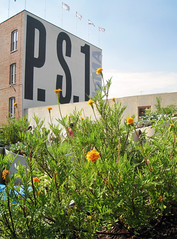 Image by xmascarol via Flickr
![Reblog this post [with Zemanta]](http://img.zemanta.com/reblog_e.png?x-id=5108775f-bb9d-4139-8c57-3159478e6315)
Tuesday, June 16, 2009
Digital not necessarily greener
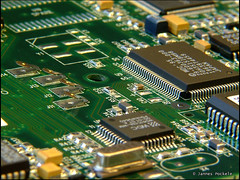 Image by jpockele via Flickr
![Reblog this post [with Zemanta]](http://img.zemanta.com/reblog_e.png?x-id=b5c0da34-e3f9-492e-aa2d-96f36256a32c)
Great idea: refer the Gas Tax/Highway Porkfest to Voters
 Who's destabilizing the climate -- that's right, we are! Graphic is 2000 per-capita greenhouse gas emissions with red highest, natch. Image via Wikipedia
SALEM — An environmental group is threatening to refer the Legislature’s gas tax to the ballot unless lawmakers do more to combat greenhouse gas emissions in the Eugene-Springfield area specifically, and elsewhere in Oregon. . . .
![Reblog this post [with Zemanta]](http://img.zemanta.com/reblog_e.png?x-id=08132654-8acf-4bd7-8e2e-669a3c8b6ecc)
Help collect the data needed for better bike facilities in Salem
Eric L., the indefatigable instigator of incessant bike information sends:
![Reblog this post [with Zemanta]](http://img.zemanta.com/reblog_e.png?x-id=edcab687-3012-4955-9650-30f9cb790e05)
 Image via Wikipedia
Hello!
Last summer, 21 volunteers counted bicycles at 32 locations and generated
40 manual counts. It was a great success! Already it is informing decisions about bicycle infrastructure, funding, and future demand.
And it's time to do it again!
Help document the way biking is growing in the Salem-Keizer area. We need volunteers to count bicycles at key intersections in the region. We hope to bring the number of locations up to about 50. There are areas of town where we didn't count, significant new pieces of infrastructure to assess (hello Union St. Railroad Bridge!), and year-over-year changes to note.
Counts will be performed in July, August, and some in September. They will be scheduled for a Tuesday, Wednesday, or Thursday, and occur during rush hour - either between 7am and 9am, or between 4pm and 6pm. You can choose the day and time slot that works best for you!
If you'd like to participate, we'll treat you to some pizza and soda. On Wednesday, June 24th at 5pm, the City of Salem, Salem-Keizer Area Transportation Study, and Mid-Willamette Valley Bicycle Transportation Alliance will hold a training and orientation. It will last about an hour. Please RSVP to salembikes [at] gmail [dot] com.
For more see the Breakfast on Bikes site (2008 or 2009).
Monday, June 15, 2009
A little reality with the bark off
The acerbic (cranky, dyspeptic, misanthropic, you pick the adjective) James Howard Kunstler is one of the best at describing the period we're entering and perhaps the most-consistent advocate of a sensible policy approach to responding. From this week's blog post:
Which brings me back to the New Urbanist annual meet-up last week in Denver. Given the gathering conditions of what I variously call The Long Emergency or the economic clusterf[log], they have had to shift their focus starkly. For years, their stock-in-trade was the greenfield New Town or Traditional Neighborhood Development (TND), a severe reform of conventional suburban development. That sort of reform work was only possible whenTo the group's credit, they realize that these conditions are no more. Suburbia is now cratering, both as a repository of wealth in real estate and as a practical matter of everyday existence. They get that the energy crisis and all its implications are real and that our response to it had better be deft. They understand that the capital resources we thought we had for Big Projects are flying into a black hole at the speed of light. Mostly they see that he time for "cutting edge" fashionista techno-triumphalist grandiosity is over.
- the continued expansion of suburbia seemed utterly inevitable, requiring heroic mitigation and
- when they could team up with the production home-builders to get their TND projects built.
To put it bluntly, the Congress for the New Urbanism (CNU) is perhaps the only surviving collective intelligence left in the United States that is producing ideas consistent with the reality. They recognize that our survival depends on down-scaling and re-localization. They recognize the crisis we will soon face in food production, and the desperate need to reactivate the relationship between the way we inhabit the landscape and the way we feed ourselves. They recognize that the solution to the liquid fuels crisis is not cars that can run by other means but on walkable towns and cities connected by public transit.
This is exactly what you will not find in the pages of The New York Times or the political corridors of power. Oh, by the way, the Obama administration contacted one of the leading lights of the New Urbanism in the weeks after the inauguration. He never heard back from the White House. I guess they're not interested.
Cross your fingers!
 Image via Wikipedia
Americans are incredibly spoiled when it comes to groceries and very price-conscious. You see people dump incredible sums on electronic toys that will be landfilled in a couple years, tops, and yet many of these people won't buy food that is priced to permit a decent life for the people who grow it. These same people have a cardiac if their milk or eggs go up a quarter, yet they buy bottled water by the case . . . .
A downtown grocery in Salem should quickly work to make deals with as many local growers as possible and to help them make the investments necessary to provide fresh seasonal fruits and vegetables year-round and all the local cheeses, meats, and breads from places like Cascade Baking Co. If the store only offers generica, well, people can get generica at Costco, Winco, and Fred Meyer for a lot less than a small downtown grocery can provide it for.
![Reblog this post [with Zemanta]](http://img.zemanta.com/reblog_e.png?x-id=2b0a0faa-0315-4da1-a9bf-7a3d1b848ddd)
Subscribe to:
Posts (Atom)

 Posts
Posts