Friday, April 3, 2009

Vital Knowledge


The Oregon State University Ag Extension Service provides you this important -- maybe lifesaving -- information. From that main page are a bunch of others with more great stuff. Here's a nice example of good service to the community:
Container Gardening

If you lack space for a garden, consider raising vegetables in containers. You can grow any vegetable in a container with enough preparation and care.

Start by finding a container large enough to support fully grown plants and with adequate soil-holding capacity to accommodate the plant's root system. The container must have drainage holes.

You can grow vegetables in almost anything, including barrels, flower pots, milk jugs, bleach bottles, window boxes, baskets, tile pipes and cinder blocks. For most plants, containers should be at least 6 inches deep

A fairly lightweight potting soil is the best growing medium for container plants. Garden soil is too heavy for container growing. Most commercially sold potting mixes are too lightweight for garden plants because they don't offer adequate support for plant roots.

If you buy a potting mix, add soil or compost to provide bulk and weight. Or mix your own with equal parts peat moss or well-rotted compost; loamy garden soil; and clean, coarse builder's sand. Add a slow-acting, balanced fertilizer (slow-release synthetic or organic fertilizers work best) according to container size. Add lime to bring the mixture's pH to around 6.5.

The ideal vegetables for containers are those that take little space, such as carrots, radishes, lettuce, and parsley or those that yield produce over a long period of time such as tomatoes, peppers, herbs, and eggplants.

When planting, first carefully clean out the container, then fill it to within 12 inch of the top with slightly dampened soil mix. Sow the seeds or set transplants. Gently water the soil with warm water, taking care not to wash out the seeds. Label each container with the name and variety of plant and planting date. When seedlings have two or three leaves, thin them for proper spacing between plants.

Water container plants whenever the soil feels dry. Apply water until it begins to run out of the container's drain holes.

Container plants need more fertilizer than plants in regular gardens because the frequent watering constantly leaches fertilizer minerals out of the soil. For best results, start a feeding program for container plants 2 months after planting. Use a water-soluble fertilizer at its recommended rate of application every 2 to 3 weeks.

An occasional application of fish emulsion or compost will add trace elements to container soil. Do not add more than the recommended rate of any fertilizer. Too much can harm plant roots.

Watch for and control plant insect pests. (See story on insect pests.) Place containers where they will receive maximum sunlight and good ventilation. During periods of high temperatures and bright sunshine, move the containers into shade during the hottest part of the day. Shelter plants from severe rain, hail, and wind storms.

The versatility and mobility of a container garden allow you to grow a wider variety of vegetable plants over a longer time span than the usual spring/summer/fall growing period. By starting your garden indoors in the spring, moving it outdoors for the summer and then back indoors in the fall for frost protection, you can use nearly every growing day.

And this great book -- available at Tea Party Bookstore in Salem! -- has great instructions for making Self-Watering Containers, for the busy, the absent-minded (and for those of us who are just lazy and want to grow more food with less work)

Thursday, April 2, 2009

Two important films @ Salem Progressive Film Series for April 2009


The Salem Progressive Film Series presents a double feature: Contaminated Without Consent and Toxic Bust

Thursday, April 9, 2009
Doors Open at 6:15 PM
Film Starts at 7 PM
$3. Adults/$2. Students
At The Grand Theater in Downtown Salem-191 High Street NE

Contaminated Without Consent

examines the scientific foundations for concern and the implications for human health from widespread contamination of toxic chemicals. Scientific studies link chemicals frequently found in consumer products to obesity, diabetes, birth defects, asthma, cancer, learning disabilities, and other health impacts. The video empowers viewers to take action in support of common- sense solutions and urgently needed government reforms that will protect families, homes, and the environment from toxic chemicals.

Toxic Bust

is a thought-provoking documentary that explores the relationship between breast cancer and exposure to toxic chemicals. The film focuses on three breast cancer "hot spots," (Cape Cod MA, The SF bay area, and workers in Silicon Valley) to explore more fully the connection between cancer and chemical exposure in the household, community, and workplace.

Guest Speakers & Audience Q & A to Follow

Dr. Sue Koger is a professor at Willamette University. Her scholarship focuses on the effects of toxicants such as pesticides on brain development and function, and the role of psychology in environmental studies. She is also a member of Salem Citizen’s for Alternatives to Pesticides.

Dr. Renee Hackenmiller-Paradis is the environmental health program director for the Oregon Environmental Council where she works to develop and promote policies and projects that protect children from toxic pollution, and to strengthen collaborative relationships with health professionals.

For more information: www.salemprogressivefilms.net

Feed a car, starve a person

Given this reality:
Sharon Astyk: The only way we are likely to avoid massive world hunger in the coming decades is to cease having human beings, their pets and their cars compete with the world’s poor for human food - more than half the world’s population mostly eats grains in their most basic form. The same half of the world’s population spends 50-90% of their income on food - so while increased demand for meat or biofuels may merely inconvenience, as the price of food goes up, for other people it is the difference between life and death. And human life is not something you play games with. As much as we like meat, eating meat that has eaten 8 lbs of human-edible grain and helped increase the price is not ok. Milk and eggs raise the same difficulties.

Salem's efforts to help force biofuels into gas tanks -- to help turn land away from growing food for people and toward growing food for cars -- are immoral.

Protip: Using tags

By the way, in case you haven't tried it, if you find a post you particularly like (or, I suppose, hate) you can find more like it by clicking on any of the tag words (labels) at the bottom of the post -- that will instantly call up a list of other posts that have that same tag.

The Salem Funky Chicken

Only funky because the City Council is making this "chicken dance" all much harder than necessary.

Since hens were legal in Salem until the 70s, logic suggests that someone in the City ought to be able to explain what problems caused them to be banned -- except that logic had nothing to do with it. The hens got caught up in an ordinance change intended to ban real livestock -- like cows and horses -- from Salem residential areas, where they were present in the first place because Salem went on an annexation craze and brought some pretty rural areas into the city limits.

Ah well, seems like we'll eventually get there. After all, the City Manager touted the City's habit of "benchmarking" against other cities policies and procedures when responding to a citizen question at the budget "town hall meetings" recently. And any serious benchmarking effort would show that urban hens are both very successful and very popular in countless cities, from small, pretty rural towns to large, urban hypercities like New York and Chicago, and in many mid-sized cities very much like Salem. Eventually the City Council will have to stop giving a veto over this benign practice to the handful of fearmongers who imagine a parade of horrible consequences from hens while ignoring all the evidence of successful urban hens in all those other cities.

Wednesday, April 1, 2009

V. Shiva nails it: Bringing food security close to home is the essential thing

To feed our ever-growing appetites, we push industrial agriculture
methods on once-traditional agrarian societies, and now we want these
faraway lands to produce a different kind of food: biofuel, to feed
the West's automobiles. At some point, Shiva argues, we're going to
have to choose between sacred cow and sacred car.

Shiva founded an organization called Navdanya to promote research in
organic agriculture and saving heirloom seeds. In her 2008 book Soil
Not Oil: Environmental Justice in an Age of Climate Crisis, she argues
that the rebirth of sustainable, traditional agriculture offers the
best way forward, in both India and in the West.

"There is a myth that there are agricultural societies, and then there
are industrial societies and service societies, as if when you become
an industrial or service society you don't need food," she says. "As
we hit climate chaos, as we hit peak oil, assuming that you can get
your food from far away and use fossil-fuel-intensive systems to
produce food is totally not sustainable. Bringing food security close
to home will have to be the project of the future."

More at http://is.gd/qetM

More Calendar Marking: Friends of the Library Book Sale!


Friends of the Salem Public Library Spring Book Sale

Friday, May 1 & Saturday May 2
10 a.m. - 5:30 p.m.

Sunday, May 11
1 - 4:30 p.m. ($3 Bag Day!)

In Anderson Rooms A&B at Salem Public Library 585 Liberty St. SE

Spring sale offerings include thousands of excellent books sorted by genre and topic to make it easy for readers to find what they’re looking for. Categories include mystery, biography/autobiography, travel, cooking, fantasy, Westerns, hobbies and craft s, romance, large print, and more.

Prices are, as always, excellent, with paperbacks and children’s books for 50 cents each; hardbacks for $1. A long list of AV items is available, including CDs, tapes, records, videos, posters and more.

The best bargains of all are available Sunday, when shoppers can fill a bag to take away for just $3.

In addition to books, the Friends are always in need of helping hands for this big event. Willing volunteers can contact Dana in the Friends’ Bookstore in person or by phone at 503-362-1755.

Another great Straub event: Leave No Child Inside

Working Together to “Leave No Child Inside”
7 p.m. Thursday, April 23 Loucks Auditorium

The “Leave No Child Inside” campaign is seeking to reverse alarming trends in children’s activities and reconnect children with nature. Presenter Martin LeBlanc will talk about the campaign and give examples of how communities are working to give their children outdoor experiences.

Martin LeBlanc is the National Youth Education Director for the Sierra Club. He is a founding member and vice president of the Children and Nature Network and is responsible for building the youth leadership with the “Leave No Child Inside” campaign.

LeBlanc was an at-risk youth who had his life turned around through an outdoor experience as a teenager. He worked as an outdoor educator with at-risk youth in Seattle, Washington and served as recreation advocate for Texas Parks and Wildlife in Austin, Texas. He serves on numerous advisory committees related to environmental education.

The presentation is free and open to the public through support from the Charla Richards-Kreitzberg Charitable Foundation, the William S. Walton Charitable Trust, Salem Public Library, City of Salem, and Marion Soil and Water Conservation District. For more information, contact the Friends of Straub Environmental Learning Center at 503-391-4145 or visit www.fselc.org.

The Friends of Straub Environmental Learning Center is a Salem-based, nonprofit organization dedicated to environmental education.

No Fooling: Why Salem must not develop the Battle Creek Golf Course

I don't golf. I think all golf courses should be converted to food gardens immediately if not sooner, and that it should be illegal to use any chemicals to grow grass anywhere (the need for petrochemical fertilizers being nature's way of telling you you're trying to grow something in the wrong place). So this isn't about my desire to preserve golfing.

But a golf course is still better than suburban sprawl. And the City of Salem knows it. Here's an excerpt from a five-page letter to "City of Salem Property Owners" concerning "Flood Hazards in the City of Salem" that the City sent me today:

"In Salem, unusually warm weather mixed with heavy rains that melt the snow in the higher elevations and flood local streams, referred to as a "Pineapple Express," contribute substantially to flooding, and ongoing development within the City continues to displace natural areas that have historically functioned as flood storage."


Well, there it is then. If Salem presses ahead with allowing development of the Battle Creek Golf Course, they will have put all of us on the hook to rescue flooding victims who build on that land (and their victims, since the development will cause other properties to flood as well).

Tuesday, March 31, 2009

A must-read from Thomas Friedman

A guilty conscience must be a powerful spur to righteousness after all. Thomas Friedman, who was an avid cheerleader and then apologist for Bush's invasion of Iraq (and so regularly urged extending the stay, in about six month chunks, that Friedman will forever be linked to the term Friedman Unit, as in "A year is two Friedman Units"), has seen the light on the climate crisis and has become the foremost advocate in the archaic media for recognizing that, fundamentally, we have managed the economy and the environment using the same "Screw the future, let's party!" thinking.

His latest column is tremendous. A taste:

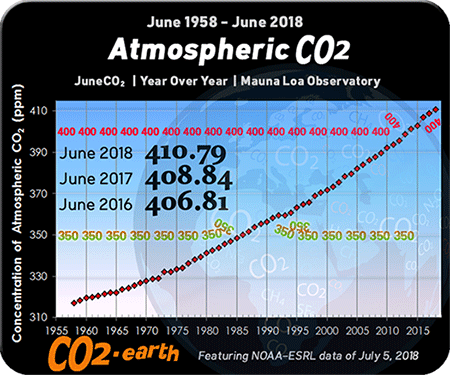
Just as A.I.G. sold insurance derivatives at prices that did not reflect the real costs and the real risks of massive defaults (for which we the taxpayers ended up paying the difference), oil companies, coal companies and electric utilities today are selling energy products at prices that do not reflect the real costs to the environment and real risks of disruptive climate change (so future taxpayers will end up paying the difference).

Whenever products are mispriced and do not reflect the real costs and risks associated with their usage, people go to excess. And that is exactly what happened in the financial marketplace and in the energy/environmental marketplace during the credit bubble.

Our biggest financial-services companies, some of which came to be seen as too big to fail, engaged in complex financial trading schemes that did not adequately price in the costs and risks of a market reversal. A.I.G., for instance, was selling insurance for all kinds of financial instruments and did not have anywhere near adequate reserves to cover claims if things went badly wrong, as they did. And our biggest energy companies, utilities and auto companies became dependent on cheap hydrocarbons that spin off climate-changing greenhouse gases, and we clearly have not forced them, through a carbon tax, to price in the true risks and costs to society from these climate-changing fuels.

“When the balance sheet of a company does not capture the true costs and risks of its business activities,” and when that company is too big to fail, “you end up with them privatizing their gains and socializing their losses,” Nandan Nilekani, the co-chairman of the Indian technology company Infosys, remarked to me. That is, everyone gets to rack up their private profits today and pay them out in current bonuses and dividends. But any catastrophic losses — if the company is too big to fail — “get socialized and paid off by taxpayers.”